Homemade Marshmallows

Homemade Marshmallows

Every so often the Food Network offers some really good ideas. Last Sunday, I watched Tyler Florence make marshmallows, a food I never thought I would venture to make from scratch. But after seeing the two egg whites whip in the stand mixer until they tripled in size — until they nearly spilled out of the mixer — I had to try for myself. Plus, he packaged them in a cellophane bag tied with a festive ribbon and nestled the pouch into a basket with a jar of hot cocoa mix, his idea for a wonderful homemade Christmas gift. After tasting one of these sugary confections, I couldn’t agree more.

Homemade Marshmallows:
Adapted from Tyler Florence

This recipe requires the use of a stand mixer.
3 tablespoons powdered gelatin
2 cups cold water
2 cups sugar
2 egg whites
2 cups confectioners’ sugar, sifted, plus more for dusting pan and marshmallows

In a medium sized saucepan soak the gelatin in the cold water. After the gelatin has softened, about 10 minutes, add the regular sugar, and gently dissolve over low heat, another 8 minutes. Remove from the heat and allow to cool to room temperature.

In a mixer, beat the egg whites until stiff peaks form. Fold in the sifted confectioners’ sugar. While the mixer is on low, slowly pour in the cooled gelatin mixture. Increase the speed and beat until white and thick. The volume should double (or triple) in size and should form between soft and firm peaks. (When the mixture fills nearly the entire bowl, it is ready.)

Coat bottom and all sides of a 9-by-13-inch baking dish with confectioners’ sugar. Pour marshmallow mixture in and top with more sifted confectioners’ sugar. Leave out overnight or for at least 3 hours to set. The marshmallow should be light and spongy when set.

Loosen marshmallow from edges of tray and invert onto a large cutting board. Use a large knife to cut the marshmallows into cubes. Sprinkle each piece with more confectioners’ sugar.

French Onion Soup

French Onion Soup

So, I’ve found something else I’m going to miss about Philadelphia. On Monday, my sister and I met for lunch at Rouge where we enjoyed the crusty rolls served with sea salt-speckled butter and the French onion soup topped with Gruyère and provolone. These cheeses blister over garlic croutons insulating the delectable onion broth below. And the crusty bits clinging to all sides of the goblet-like bowls are irresistible.

While I can’t say I’m a French onion soup connoisseur, I have ordered my fair share of this bistro classic, including five bowls this week alone, a spree that began last Saturday up in NYC. A.O.C., the adorable Greenwich Village restaurant where I sat with two friends for a few hours, set the standard, one so high I feared no place in Philly could equal. And for the most part, the soups I sampled confirmed my worries. At both Brasserie Perrier and Caribou Café, the soup had not been thoroughly heated before being topped with the crouton and cheese and thrown under the broiler. Both should have been sent back to the kitchen.

My weeklong onion-soup bender also inspired me to make my own batch, which to my surprise and delight was very simple. I opened Daniel Boulud’s Café Boulud Cookbook, a book I have not used once, but has now piqued my interest. The success of French onion soup, says Mr. Boulud in his notes preceding the recipe, depends on cooking plenty of onions “very, very slowly until they are soft, sweet and caramel colored,” and deglazing with white wine, which adds the necessary “touch of acidity.”

My onions cooked for about an hour and I used a mix of Sherry and Madeira because I didn’t have any white wine. I also used homemade chicken stock, which Mr. Boulud describes as “rarely the star player,” but whose “supporting role can elevate just about anything.” I would agree that a homemade chicken (or beef) stock makes all the difference in this soup.

While any ovenproof bowls will work, it’s fun to eat this soup out of the traditional crocks. I found mine at Kitchen Kapers for $7.99 each. Fante’s and the Philadelphia Bar & Restaurant supply shop at 5th and Bainbridge also sell these vessels.

French Onion Soup
Serves 6

3 tablespoons unsalted butter
2 pounds yellow or Spanish onions, peeled, trimmed and sliced thinly
1 clove garlic, minced
kosher salt
freshly ground black pepper
2 teaspoons all-purpose flour
1 cup dry white wine or Madeira or Sherry
Herb sachet: (2 sprigs Italian parsley, 2 sprigs thyme, 8 peppercorns and 1 bay leaf, tied together in a cheesecloth)
2 quarts homemade chicken stock
1 mini French baguette
2 cups Gruyère or Swiss cheese, coarsely grated
4 to 6 sprigs parsley, leaves finely chopped

In a large Dutch oven or soup pot, melt the butter over medium heat. Add the sliced onions and garlic to the pot, season with salt and pepper, and cook stirring regularly, until the onions are a deep caramel color, about 30 minutes to an hour.

Dust the onions with the flour and cook, stirring for about five minutes to toast the flour and rid it of its raw taste. Add the white wine and cook, stirring until the wine almost evaporates completely. This happens almost instantly.

Add the herb sachet, the stock and a pinch of salt. Bring to a boil, then lower the heat and let simmer 40 to 60 minutes.

Meanwhile, preheat the oven to 350ºF. Slice the baguette into one-inch thick rounds. Place rounds on a baking sheet, and toast in the oven until lightly golden, about 10 minutes. Remove pan from the oven and let cool.

Preheat the broiler. Taste the soup. Add more salt and pepper if necessary. Remove the sachet and discard. Ladle the soup into individual ovenproof serving bowls. Cover each with two baguette rounds. Top each generously with the grated cheese. Top each with a pinch of chopped parsley. Place bowls on a baking sheet and place under the broiler. Broil until the cheese melts. Serve immediately.

Homemade Chicken Stock
Yield = 1 gallon

4 lbs. of chicken legs
2 carrots, peeled, cut into large chunks
2 ribs celery, trimmed, cut into large chunks
2 medium onions, peeled and quartered
1 leek, trimmed, split lengthwise, and washed
1 bay leaf
1 teaspoon peppercorns
1 bunch Italian parsley

Place the chicken in a large stockpot. Cover with 2½ quarts of cold water and bring to a boil. Skim off scum that rises to the top. Simmer 10 minutes, skimming regularly.

Add the remaining ingredients to the pot and simmer gently for three hours, skimming as necessary. Drain the stock into a colander set over a bowl. Allow the solids to drain before discarding them. Strain stock again through a fine-mesh strainer. Transfer to storage containers and chill in the refrigerator over night.

The next day, scrape off any fat solidified at the top of the stock. Freeze stock indefinitely or keep in the refrigerator for four days.

Roasted Brussels Sprouts

Roasted Brussels Sprouts

Recall my friends Kristin and Liz. You remember, the ones that went to town on the baklava and flatbread that night back at my apartment after an evening carousing in Old City this past August. Well, I had the pleasure of seeing them along with some other good friends this weekend up in NYC. Upon arriving, I presented Kristin, my host, with a block of fudge, the first batch I had ever made. The three of us chatted for awhile, but before long, Liz had convinced Kristin to unwrap the parchment paper and tuck in. This time, however, just a small taste sufficed — this fudge is rich, richer even than baklava.

They both inquired about how to make it, but as soon as I began explaining the “soft-ball stage,” I had lost them. They very politely requested that I post some easier recipes every so often, ones with fewer steps and fewer ingredients. I’ve taken their suggestion to heart and am going to make an effort to post simple recipes more frequently, these roasted Brussels sprouts being the first of the series.

I suppose I should have asked my two friends if they like Brussels sprouts — people seem to either love or hate these little cabbages — but this recipe couldn’t be simpler. So, Kristin and Liz, if you like Brussels sprouts, you’ll love these, and I am confident you will have no trouble making them. And once you’ve mastered these simply roasted Brussels sprouts, you can dress them up with Fuji apples, cème fraîche and pistachios, as they were prepared last December at Alta, a tapas restaurant in the West Village.

Roasted Brussels Sprouts
Serves 3 to 4

1 lb. Brussels sprouts
olive oil
kosher salt
freshly ground pepper

Preheat the oven to 400ºF. Cut the rough end off each Brussels sprout and discard. Cut each sprout in half. Place on a rimmed baking sheet. Drizzle two to three tablespoons of olive oil over the top. Sprinkle to taste with salt and pepper. Toss mixture together until evenly coated with the flavorings. Roast for 15 to 20 minutes or until sprouts are knife tender and slightly charred.

Duncan Hines Yellow Cake Mix Baking Spree

Duncan Hines Yellow Cake Mix Baking Spree

Three-hundred sixty-four days a year, my mother suffers from make-it-from-scratch syndrome. On her one day a year liberated from this affliction, she spends a few hours preparing a Greek New Year’s cake (vasilopita), pulling from the pantry a box of Duncan Hines yellow cake mix and a box of instant vanilla pudding. She combines these two powders in a bowl, adds a considerable amount of rum – the secret, she says, to the cake’s moist texture – and before long has produced a beautiful rum bundt cake, the dessert of choice for our annual coin-hiding, cake-cutting, Greek ritual.

Introducing this old WASP recipe into my mother’s repertoire – one dominated by traditional Greek dishes like spanakopita and moussaka – was no easy task. My stepfather, the man responsible for accomplishing this feat many years ago, still gloats to this day.

Only after several attempts at making the cake from scratch (substituting for the powdered mixes a pound cake one time and a chiffon cake another) received unfavorable reviews, did my mother concede, vowing never to tinker with the recipe again, a pledge widely supported by the rest of the family. Moist and boozy with a sugary-buttery glaze, this cake – in its original incarnation – has been a favorite since its debut.

Although my adoration for the rum bundt cake has made me less skeptical than my mother of recipes calling for instant cake mixes, I still find myself calling home to consult the authority before opening the box. “Be sure to add vanilla extract or a splash of Bourbon,” she always tells me, adding, “you need something to hide that artificial flavor.” Rarely do I end up making the recipe.

A recent visit to Williams- Sonoma, however, unexpectedly inspired a prepared-mix baking spree, my arrival to the shop fortuitously coinciding with the presentation of a batch of freshly made pumpkin dessert bars. Spiced with cinnamon, double-textured like a lemon bar, these pumpkin treats instantly won the affection of all who sampled them. Much to my surprise, the recipe called for a box of yellow cake mix.

After successfully making the pumpkin bars at home, along with a pan of quick apple kuchen, neither recipe calling for extract or alcohol, I resolved never to look suspiciously at recipes beginning with a premade mix. Though I’ll never tell my mother, my recent discoveries have confirmed an inkling I’ve had for years regarding the legendary rum bundt cake: The secret’s in the box, not the bottle.

The rum bundt cake can be made in mini pans as well. This was a batch I made last year for the Greek New Year’s Cake. Last year, I made the cake from scratch — truthfully, it’s much better using the box!
Rum Bundt Cake

1 box yellow cake mik
1 pkg. instant vanilla pudding
½ cup rum
4 eggs
½ cup canola oil
½ cup water

Preheat the oven to 325ºF. Mix all with an electric mixer for five minutes. Grease bundt pan and lightly flour. Bake for one hour.

1 stick butter
¼ cup rum
½ cup sugar

Meanwhile, combine rum, butter and sugar together in a saucepan. Bring to a boil. When cake comes out of the oven, pour one-third of this mixture into the bottom of the cake. Let sit for 30 minutes. Turn cake out onto a cooling rack. Paint a layer of the glaze all over the cake. Let harden. Paint another layer. Repeat until all the glaze is gone.

Note: Tastes even better the second day.

Pumpkin Butter Dessert Squares

1 package yellow cake mix
½ cup butter, melted
3 large eggs
1 jar Muirhead pumpkin butter (This is the Williams Sonoma brand, but any will do. The jar was 13.5 oz.)
½ cup milk
1 tablespoon flour
¼ cup sugar
¼ cup butter, softened
1 teaspoon cinnamon.

Preheat the oven to 350ºF. Measure one cup of cake mix. Set aside. Stir remaining cake mix with the butter and one egg. Press the mixture into the bottom of a 9-by-13-inch pan. Mix the jar of pumpkin butter with the remaining two eggs and milk. Pour mixture over layer in the pan. Stir the reserved cake mix with the flour, sugar, butter and cinnamon. Mix until crumbly. Sprinkle over the top of the pumpkin layer. Bake for 35 to 40 minutes or until golden brown. Cut into two-inch squares. Serves 24.

Note: Of the three recipes posted here, I would say the kuchen tastes the most artificial, a sour cream glaze giving it an Entenmman’s-like character. Best served warm with a cup of coffee, however, this kuchen is still delectable.

Quick Apple Kuchen
Serves 20-24

1 box yellow cake mix
½ cup butter, softened
½ cup sweetened coconut
½ cup sugar
1 teaspoon cinnamon
3 large apples, peeled and sliced thinly
1 egg
1 cup sour cream

Preheat the oven to 350ºF. Combine first three ingredients together in a bowl. Mix with your hands or beat slowly with an electric mixer. Grease a 9-by-13-inch baking dish. Pat mixture into pan. Bake 10 minutes. Meanwhile, mix cinnamon and sugar together and toss with the apples. Remove pan from the oven and top with the apple mixture. Whisk egg and sour cream together and drizzle over the apples. Return to the oven for 30 to 35 minutes. Serve immediately.

Daley Toffee

Daley Toffee

Well, after spending hours in the test kitchen, sifting through recipes submitted for The Bulletin’s “Edible Gift Recipe Contest”, I found a winner — Daley Toffee, a family recipe submitted by Laura Daley of Mount Airy. Crunchy, sweet, chocolaty, nutty, buttery, this toffee is so yummy! And addictive. Almost immediately after breaking the toffee into shards and photographing it, I brought it into the office — mostly to get it out of my sight — where the staff polished it off … I received several e-mails that day describing the scene. I returned to work the next day to find the empty Tupperware sitting on my chair.

Before trying this recipe, I had never attempted making toffee, and now, I have no fears of candy making or of terms like “hard-ball” stage. Cooking the sugar and butter mixture until it reaches the hard-ball stage is the only tricky part of this recipe, but Laura’s instructions make the process painless. Instead of relying on a thermometer, which I find never to be accurately calibrated anyway, Laura’s method calls for testing the mixture by dropping a small spoonful of the mixture into a glass of cold water — it’s foolproof.

The toffee, as Laura notes in the recipe, makes a great gift for the holidays. Several years ago, I purchased a case of 100 brown stationary boxes from Usbox.com. Although this large case of boxes takes up nearly half our storage space in the basement, every holiday season I am so happy to have these clear-top boxes on hand. I have packaged biscotti and chocolate truffles in them for the past two years, and now I will pack Daley Toffee in them as well. For a nice presentation, use parchment paper as a base inside the box, wrap the box with a delicate ribbon, and tie on a simple tag describing the contents of the box. My favorite tags to use for gift giving are metal rim tags, which you can find at Staples or any office supply store. They sell packs of 50 for about $10.

Daley Toffee: A Family Recipe
Laura’s notes: This recipe makes a great holiday gift for those with a sweet tooth! It keeps up to 2 weeks if you put it in an airtight container.

1 C. salted butter 

1 C. sugar 

3 T. water (if tap, put through a Britta or use well or bottled) 

1 1/8 tsp. vanilla
2/3 C. ground pecans (or nut of your choice) 

4-6 oz. premium milk chococlate (bar form is easiest; can also do a dark chocolate but we think milk chocolate is best)

Directions:
1. Cook butter, sugar, water, and vanilla over medium heat stirring CONSTANTLY until golden brown — test for hard ball stage in cold water. It may smoke, but don’t worry.
2. Put half to 2/3 of the nuts in the bottom of a greased 9×9 inch pan. 

3. Pour the cooked butter/sugar mixture over the nuts. 

4. Wait a few minutes and put the chocolate on top — when chocolate softens, spread evenly and sprinkle remaining nuts on top.
5. When completely cool, break into pieces. Store in airtight container. 

NOTE: You can also use an 8×13 if you’d prefer a thinner version — in which case increase nuts to 1 C.

Best Buttermilk Biscuits

Best Buttermilk Biscuits

Several years ago, The Washington Post ran an article in their food section called “Building a Better Biscuit,” which my grandmother saved for me, and which I have referred to many times since. The article gives some good suggestions: Don’t overwork the dough; to get maximum rise, bake the biscuits soon after they are cut; and use buttermilk, fine sea salt, and a combination of baking powder and baking soda. Light, flaky and buttery, these biscuits are delectable!

The original recipe called for eight tablespoons of shortening, but I, conditioned by my mother, use all butter instead. This recipe can be adapted — I made a cashel blue cheese and chive variation for St. Patrick’s Day — and the dough, unbaked, can be frozen and baked straight from the freezer. I prefer to eat these just as they are, maybe with a little butter, but they also make a nice base for poached eggs, Ben’s favorite way of eating them.

Buttermilk Biscuits
Yield = 8 biscuits

2 cups all-purpose flour
2¼ teaspoons baking powder
¼ teaspoon baking soda
¼ teaspoon fine sea salt
2 tablespoons sugar
8 tablespoons cold unsalted butter
¾ cup buttermilk plus more for brushing

Preheat the oven to 400ºF.
In a large bowl, whisk together the flour, baking powder, baking soda, salt and sugar. Cut the butter into the flour mixture and using a fork, mix the butter and flour until the butter has broken into small bits and flakes.
Pour buttermilk into flour mix. Stir with fork just until the dough comes together to form a mass — Do not over-mix. Gently gather the dough in the bowl to bring together, adding an extra tablespoon of buttermilk if necessary. Turn out onto a lightly floured work surface. Pat the dough into a ¾-inch thick circle. Using a two-inch round cutter, cut the dough into eight biscuits. Transfer to an ungreased or parchment-lined baking sheet, spacing the biscuits 2-inches apart.
Brush each biscuit lightly with buttermilk. Sprinkle a pinch of sugar over the top of each. Transfer sheet to the oven, immediately increasing the temperature to 425ºF. Bake the biscuits for 15 to 20 minutes or until golden. Remove from the oven, transfer to a wire rack to cool or serve immediately.

Pumpkin Dinner Rolls

Pumpkin Dinner Rolls

With Christmas less than a month away, only a few weeks remain to experiment more with pumpkin. Pumpkin ice cream is high on my list; pumpkin tiramisu, however, is falling quickly. It may not, unfortunately, happen this season.

And thanks to a free sample offered at Williams-Sonoma yesterday, I think I’ll be making a batch of pumpkin dessert bars very soon. I’m usually not a sucker for those jarred products (butternut squash purée, for example, or roasted garlic tomato sauce) but the bar I sampled, made with a jar of their featured pumpkin butter (Muirhead), was particularly good, and the jars, at half price, became very attractive. The sales woman advised I buy two because no more would arrive this season. So, I did.

These dinner rolls, made simply with a can of Libby’s pumpkin purée, actually have nothing to do with the WS pumpkin butter. Last week, looking for a festive recipe for Thanksgiving, however, I searched on Epicurious and found a recipe for “pumpkin nutmeg dinner rolls”, which looked pretty good. Just like several of the 35 other reviewers, however, I wasn’t crazy about the amount of butter suggested (12 tablespoons), so I omitted it altogether. I also left out the egg, added more salt (as many of the reviewers felt necessary), and added more “pumpkin spice” — cinnamon, cloves, nutmeg, ginger — since many of the reviewers felt the rolls lacked pumpkin flavor. Without butter and eggs, these rolls lack the richness of a classic Parker House Roll, but nonetheless remain moist and flavorful (and far more healthy).

Anyway, I never got around to making these for Thanksgiving, but I have about 20 frozen remaining in my freezer from the batch I experimented with before the holiday. Every night, I wrap one in foil and place it in the oven to thaw. They are delicious, but best the day they are made, pulled apart at the table and served with softened butter.

Pumpkin Dinner Rolls
Yield = 22 to 24

¾ cup milk, room temperature
2 teaspoons instant yeast
¼ cup sugar
15 oz. can pumpkin purée
5 cups all-purpose flour, plus more as needed
1 teaspoon cinnamon
½ teaspoon ground ginger
1/8 teaspoon ground cloves
freshly grated nutmeg to taste
1 tablespoon kosher salt
butter for greasing
1 egg

Place milk, yeast and one teaspoon of the sugar in the bowl of a standing mixer fitted with the dough hook. Let sit 15 minutes. Add remaining ingredients, except for the butter and egg, and mix on low speed for 10 minutes, adding more flour until the dough gathers around the hook and pulls away from the sides of the bowl as the hook rotates. The dough should not stick to the bottom and sides of bowl. Transfer the dough to a greased bowl, cover with plastic wrap and let rise until doubled in bulk, about two hours.

Punch down the dough, and turn out onto a lightly floured work surface. Grease two 9-inch square or circular baking pans. Portion the bread into 22 to 24 small balls (each weighing approximately 2- to 2¼-ounces). Place 10 balls in each pan, leaving space around each to rise. Cover with plastic wrap and let sit for another hour until doubled in bulk.

Preheat the oven to 400ºF. Place pans in oven for 20 minutes. Meanwhile, beat egg with 2 teaspoons water. After the 20 minutes, brush the rolls with the eggwash and return to the oven for another 5 minutes. Remove pans from oven and turn rolls out onto a cooling rack or board. Serve immediately, letting guests pull rolls apart at the table. Serve with softened butter.

Mache and Persimmon Salad

Mache and Persimmon Salad

I cannot believe it, but today my blog celebrates its one-year birthday. Exactly one year ago today, I wrote about quince membrillo, a sweet paste commonly served with several Spanish cheeses including Manchego, Roncal, Idiazabal and Zamorano. This past week, I introduced two good friends and their family members to membrillo and the tradition of eating membrillo with sheep’s milk cheeses. My friends, Emily and James, married in Cyprus July 18, celebrated their marriage stateside this past Sunday in Chapel Hill, and in the days leading up to the festivities, we enjoyed many delectable dinners together commenced with this classic combination.

While in North Carolina, Emily and I spent a good hour one day touring around a gourmet food shop, A Southern Season, where I found among many goodies a large selection of Cypress Grove cheeses (Cypress Grove makes Humbolt Fog). Being vegetarians, James and Emily try to eat cheeses specifically made without rennet, a coagulating enzyme made from the stomach of calves. Many, if not all, of Cypress Grove cheeses are made with a vegetarian rennet, including a yummy sheep’s milk cheese called Lamb Chopper, which we savored with the membrillo. We actually enjoyed the fruit paste with all of the cheeses — Brie, Morbier, Tomme de Savoie — we ate this past week, but the Lamb Chopper-membrillo combination proved the best of all.

My week in North Carolina to say the least was memorable. By the end of each day, my face hurt from smiling and laughing so much — I lived with James’ family for the week, a family of four funny children, two entertaining parents and two wonderful dogs. We played Scrabble and ping pong, watched Mostly Martha and Grizzly Man, took walks with Molly and Sally (the dogs), and generally just enjoyed the time spent together with good company.

On one of the first nights of my visit, we also enjoyed thin slices of Fuyu persimmons with all of the cheeses. Fuyu persimmons make a nice seasonal addition to many dishes, including salads and paninis. Available from September through December, persimmons peak in November, perfect timing for the Thanksgiving Day feast. If you’re sill searching for a first course to prepare for Thursday’s meal, try this salad — elegant, seasonal and delectable — a festive addition to the Thanksgiving Day table.

Mache and Persimmon Salad
Serves 4

2 small shallots
2 tablespoons champagne vinegar
2 tablespoons lemon juice
½ teaspoon Dijon mustard
¼ teaspoon sugar
½ teapoon kosher salt
1/3 cup extra-virgin olive oil
2 Fuyu persimmons
4 oz. piece of Parmigiano Reggiano
8 oz. mache
freshly ground pepper

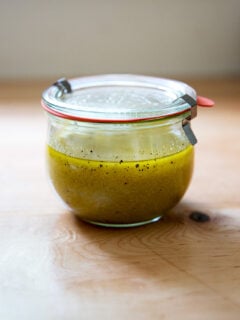
To make the dressing, whisk the shallots, vinegar, lemon juice, mustard, sugar and salt together. Slowly drizzle in the olive oil, whisking constantly to make an emulsified dressing. Set aside.

Cut the ends off each persimmon. With a paring knife, slice off the skin, removing as little flesh as possible. Using a mandoline, cut each persimmon into thin slices. (Alternatively, slice thinly using a sharp knife.) Set aside

Using a peeler or a knife, shave thin long strips off the block of Parmigiano. Set aside.

Place greens in a bowl and toss lightly with the vinaigrette. Divide the slices of persimmon evenly among the plates. Top each with a generous handful of greens. Top with the cheese shavings. Crack pepper over each salad and serve.

MREs

MREs

On November 10, 1775, the Second Continental Congress resolved to create the Continental Marines, a force of two battalions captained by Samuel Nicholas, a Philadelphian. Later that day, Capt. Nicholas set up his recruiting headquarters in Tun Tavern, today regarded as the birthplace of the United States Marine Corps. (A plaque marking the approximate location of Tun Tavern stands on Front Street between Walnut and Chestnut.)

Since November 10,1925, when the first formal ball took place in Philadelphia, the Marine Corps has celebrated its birthday each year with galas all over the world. All commemorations of the birthday include a reading of Order No. 47, written in 1921 by General John A. LeJeune, summarizing the history, mission and tradition of the Marine Corps. Yesterday marked the 232 birthday of the USMC.

Last Saturday, presented with the rare opportunity to help my husband prepare for a weeklong field exercise, I found myself “fieldstripping” MREs (Meals, Ready-to-Eat), the self-contained, individual rations used by the U.S. military. Fieldstripping consists of removing excess wrapping (added weight) and unneeded accessories (such as pepper, sugar, and non-dairy creamer packets), leaving the package filled with the bare necessities: snack bars, chili and beans, and M&Ms, for example.

For my services, I got paid with a package of vegetable manicotti — classic field currency — and a few other MRE components as well. While I’m sure the novelty of eating this astronaut-like food fades quickly, at the moment I’m totally intrigued.

Within seconds of filling a small pouch with a couple of tablespoons of water, the heating unit tucked inside activated, causing the bag to puff like a balloon. Hot air burst through the open end, like steam escaping a whistling teakettle’s lid, making the plastic bag hot — dangerously hot — to touch. A chemical smell, redolent of burning plastic, filled the air as the heater began warming my vegetable manicotti, squeezed inside the pouch as well in its own plastic wrapping. Following the instructions, I positioned the pouch at a slight incline and patiently waited for the magic to happen.

In the meantime, I assembled a little hors d’oeuvre — crackers and peanut butter — and opened a side dish — mango-peach applesauce. I removed the contents of the accessories pouch, setting aside the damp-proof matches, a moist towelette and two pieces of gum, opening the salt and pepper preemptively.

After 10 minutes, I removed the meal pouch and tucked in, spooning out the meal straight from the bag, attempting to keep the experience as authentic as possible. Tomato sauce, the smell reminiscent of a cafeteria lunch buffet, covered a single tube of pasta, the vegetable purée inside textured like pâté. The taste, a touch institutional as well, was fixed by splashing the entire contents of a 1/8-ounce bottle of Tabasco into the pouch.

To wash it all down, I sipped on a vanilla dairy shake, fortified with vitamin D and calcium, packing a whopping 450 calories. And while I had hoped for a packet of peanut M&Ms or Skittles, a very dense carrot pound cake satisfied my sweet tooth.

Truthfully, while I quite enjoyed my meal, I perhaps relished even more the experience, one highlighted by having to use a bottle of Tabasco standing just taller than a book of matches. If I had to subsist on MREs daily, as my husband and fellow Marines had this past week during their patrol exercise, I probably would think otherwise. Moreover, as noted by my husband, I rarely would have the opportunity to enjoy my MRE as a sit-down meal: “Chow is continuous,” he says. “You eat when you can.” Each MRE contains approximately 1,200 calories, and often one MRE, when supplemented by a few grocery store items — beef jerky and Jif-to-go — will last an entire day.

Sometimes too, my husband reminded me, limited time precludes heating. I envisioned eating cold vegetable manicotti — a hard but not impossible act. And then I considered some of the others entrées — cheese omelet with vegetables, beef ravioli, and barbeque pork ribs — a harder idea to swallow. Apparently, hot or cold, “the omelet is the worst thing ever.” But everyone has a favorite, and once the meals are distributed, a fair amount of swapping takes place: Mexican-style corn for refried beans, for example, or pumpkin pound cake for a molasses cookie.

In 1980, the MRE replaced C-rations (combat rations), which consisted of six cans including an entrée, cheese, crackers, candy, an accessory pack, a dessert and four cigarettes. A C-ration contained no heating device, though troops devised “all sorts of ingenious heating mechanisms,” says retired US Army Lieutenant Colonel David Smith. Mr. Smith, a former helicopter pilot, would drain fuel from his helicopter into a can filled with sand to create a sterno-like heater. A tank’s engine could also be used as a heater. When Mr. Smith served, rations were swapped just as they are today, and of course there were favorites back then too — beans and franks, and ham and eggs.

MREs, a vast improvement over C-rations, are remarkable inventions: They have a minimum shelf life of three years, can withstand a parachute drop from 1,250 feet, and can sustain short-term temperature extremes of -60ºF and 120ºF. And MREs continue to improve: To eliminate the need for fieldstripping, scientists have been developing a lighter weight and more calorically dense ration, First Strike Rations, allegedly well received thus far.

I asked my husband if the guys, after being in the field for several days, ever talk about the food they miss.

“All the time,” he said.

I bet they did — homemade bread, spaghetti and meatballs, roast chicken. But I shouldn’t have been so romantic: My husband disclosed the food most craved when out in the field — Five Guys Burgers and Fries. I should have known. I did just learn, after all, that McDonald’s is the only restaurant that consistently exceeds my husband’s expectations.