Category Archives: Soup

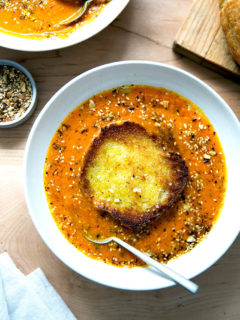
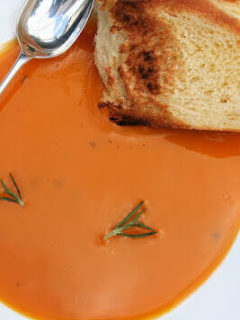
Rosemary-Butternut Squash Bisque & Challah

In the beginning of the growing season, I promised to document each CSA I received. To say the least, I have been negligent, especially recently. For this soup, I think I used the contents of three separate CSAs. I definitely roasted two butternut squash and two delicata squash, and I swear I roasted a pumpkin too, but I can’t find any documentation of actually receiving a pumpkin — I’ve written down each week’s content, and pumpkin is no where to be found on my lists. Am I going crazy?

Anyway, this soup couldn’t be simpler to make, and the recipe really is just a guide. I set the oven to 400ºF or 450ºF, cut the squash in half, scooped out the seeds, placed the squash cut-side down, and roasted them until they were tender (maybe 45 minutes or an hour). Once cooled, I scooped out the flesh, combined it all in a bowl, froze 2 cups of the mix for a later use (maybe ravioli filling) and added the rest (about 2 quarts) to a pot. I filled the pot with chicken stock, added salt, pepper and chopped rosemary, and simmered it for 30 minutes. I used my emersion blender to purée the mix, and in no time I had made a delectable soup.

The recipe called for orange zest, which I didn’t have and so didn’t use, but I remember it being a nice flavor when my mother used to make this soup for us. The recipe also calls for cream — which I guess justifies the title, though I would hardly call this purée a bisque — which I also didn’t use.

I happened to have some frozen challah on hand that I had made for a Rosh Hashanah article I was writing about Fork’s baker, Lauren Derstine, and it turned out to be a nice dipping bread, though any bread will do. Little Lindis and Mr. T. are heating up a bowl of this soup as I write…they can be the judges.

Rosemary-Butternut Squash Soup
Yield = 2 quarts

2 medium butternut squash
olive oil
6 cups chicken broth, preferably homemade
1 tablespoon chopped fresh rosemary
2 teaspoons grated orange zest
kosher salt and pepper to taste
2 tablespoons heavy cream, optional

Preheat the oven to 375ºF. Cut the squash in half lengthwise, scoop out the seeds and discard. Drizzle a teaspoon of olive oil on the baking sheet. Place the halves cut side down, rub in the oil and place in the oven. Roast until knife tender, about 45 minutes. Remove squash from the oven and let cool.

Scoop the flesh into a saucepan (discarding the skin), and add the broth, rosemary, orange zest, a big pinch of kosher salt and pepper to taste. Bring to a boil, reduce heat, and let simmer for 30 minutes. Using an emersion blender, puree the mixture until smooth. Alternatively, transfer to a food processor or blender, and puree until smooth. Taste, adjust seasoning if necessary and adding the cream if desired. Serve with crusty bread.

Measuring ingredients with a weight scale, just as professional bakers do, will more accurately reproduce this recipe than will volume measurers. While more accurate than digital scales, mechanical scales are expensive, take up space and are perhaps unnecessary for the home baker. Salter brand makes several good, reasonably priced, easy-to-store scales available at Fante’s, Kitchen Kapers and Williams Sonoma. For normal baking, a six to nine pound capacity will suffice.

Challah
Adapted from Peter Reinhart’s The Bread Baker’s Apprentice (Ten Speed Press, 2001)
Yield = 1 large loaf

4 cups (18 oz.) unbleached bread flour
¼ cup (2 oz.) granulated sugar
1 teaspoon (.25 ounce) salt
1 1/3 teaspoons (.15 ounce) instant yeast
2 tablespoons (1 oz.) vegetable oil
2 large eggs, lightly beaten
2 egg yolks, (whites reserved) lightly beaten
¾ cup plus 2 T. water
sesame or poppy seeds for garnish (optional)

Whisk together the flour, sugar, salt and yeast in the bowl of a stand mixer. In a separate bowl, whisk together the oil, eggs, yolks and water. Pour the liquid mixture into the flour mixture. Mix on medium-low speed for six minutes using the dough hook, adding a touch more flour if necessary — dough should gather round the hook (not be stuck to the bottom of the bowl), but be careful not to add to much additional flour. (Alternatively, knead on a lightly floured work surface for 10 minutes. While this method works fine, using a mixer helps prevent adding too much additional flour to the dough.)

When dough is soft and supple (not sticky), transfer the dough to a lightly oiled bowl, rolling the dough to coat. Cover the bowl with plastic wrap and leave to rise for one hour.

Remove the dough from the bowl, knead for two minutes to degas. Shape the dough into a ball, return it to the bowl, cover with plastic wrap and let rise again for another hour, or until the dough has doubled in bulk.

Remove the dough from the bowl and divide into three equal pieces. (If using a scale, weigh each portion.) Roll each portion into a ball, place on a work surface, and let rest 10 minutes.

Roll the pieces into long strands, each the same length, each with tapered ends and a slightly thicker center portion. Braid the dough starting from the middle: On a work surface, place the three strands perpendicular to you and parallel to one another. From the left, number the strands 1, 2, 3. Beginning in the middle of the loaf and working toward you, follow this pattern: right outside strand over the middle strand (3 over 2); left outside strand over the middle (1 over 2). Repeat until you reach the bottom end of the dough. Pinch the end closed to seal and rotate the dough 180º so that the unbraided end is facing you. Continue braiding but now weave the outside strand under the middle strand until you reach the end of the loaf. Pinch together the ends to seal.

Line a sheet pan with parchment paper and transfer the loaf to the pan. Beat the reserved egg whites until foamy and brush the dough with them. (Set aside whites for later.) Mist the loaf lightly with spray oil and cover loosely with plastic wrap. Let the dough rest at room temperature until it is one-and-a-half times its original size, about 60 to 75 minutes.

Preheat the oven to 350ºF with the rack in the middle shelf. Brush again with the egg whites, and if desired, sprinkle with sesame seeds. Bake for 20 minutes. Rotate the pan 180º and continue baking for another 20 minutes, or longer. The bread should be a rich golden brown.

Transfer to a cooling rack and let cool at least one hour before slicing.

End of Summer Recipes

I know it’s officially fall, but with the temperature in the 90s and the humidity at 80 percent, it still feels like a Philadelphia summer. And while the tomatoes and the corn have passed their prime, most farmstands still abound with each, along with many other goodies: peppers, zucchini, squash and basil.

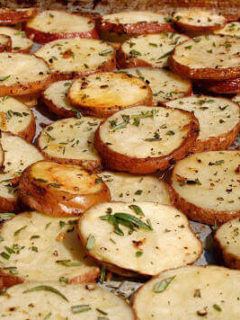
So while the days of steamed corn and fresh tomato salad may be numbered, the summer produce can still be enjoyed in many ways: This roasted potato salad, my mother’s recipe, is perhaps my favorite — and the easiest — of the bunch. The warm potatoes soak up all the flavors of the dressing — a mustard vinaigrette seasoned with rosemary and chives — making a wonderful side dish. The strata feeds many people, for a potluck perhaps, or one for a week — I’ve had a piece each night for the past seven days. My mother also introduced me to this corn pudding recipe, featured in Gourmet earlier this summer, a nice change from corn on the cob. And the chowder, filled with bacon, peppers and potatoes, should be saved for some colder weather, but savored before the hearty-chili season really begins. Enjoy!

Corn Chowder
Yield = 2 quarts

3 slices bacon
4 cups chicken stock
5 ears of fresh corn, kernels removed
2 red bell peppers, finely chopped
1 jalapeno pepper, finely chopped
1 medium onion, finely chopped
4 stalks celery, finely chopped
1 lb Yukon Gold or red Bliss potatoes, peeled and cut into ½-inch dice
kosher salt and pepper to taste
5 scallions, thinly sliced
1½ cups whole milk
grated cheddar or pepper jack cheese

Place bacon on a double layer of paper towels on a plate. Cover with another layer of paper towels and microwave on high at two-minute intervals until crisp, about 6 minutes. Meanwhile place chicken stock, corn, peppers, onions, celery and potatoes in a medium saucepan and bring to a boil. Season with kosher salt and pepper to taste. Add the scallions and the milk. Break the crisp bacon into the soup. Stir, taste and add more salt and pepper if necessary. Serve with grated cheese if desired.

Summer Vegetable Strata
Serves 6 to 8

6 slices white sandwich bread
kosher salt and pepper
2 tablespoons olive oil
1 small onion, julienned
2 small yellow squash or zucchini
1 cup of roasted red peppers, julienned
2 cups milk, (1%, 2% or whole)
5 large eggs
½ cup pepper jack cheese
a pinch of crushed red pepper flakes
1 cup of basil leaves
¼ cup of chopped chives
1 ball of fresh mozzarella, cut into ½-inch thick slices to yield about a ½ cup

Preheat the oven to 350ºF. Lightly butter a 9-by-13-inch baking dish. Remove the crusts from the bread and crisp lightly in the toaster. Once cooled, arrange in a single layer in the bottom of the dish. Season with salt and pepper to taste.

Over medium heat, sauté the onion in the oil until soft and slightly caramelized, about 10 minutes. Meanwhile, trim the ends off the squash, cut them lengthwise into quarters, and then crosswise into ¼-inch thick slices. When the onion is slightly brown, add the squash and cook for 2 minutes longer. Add the peppers and cook for a minute longer. Season mixture with salt and pepper to taste and remove from the heat.

In a large bowl, whisk together the milk, eggs, half of the cheese, pepper flakes, basil, chives and a big pinch of salt. Using a slotted spoon, transfer the vegetables to the baking pan, spreading them evenly over the bread. Pour the milk mixture over top. Scatter the remaining cheese and mozzarella over the top. Bake for 40 minutes. Let cool for 10 minutes before serving.

Corn Pudding with Scallions
Serves 8 to 10 as a side dish

4 cups corn (from 6 ears)
4 scallions
3 tablespoons all-purpose flour
1 tablespoon sugar
¼ teaspoon kosher salt
2 cups 2% milk
4 eggs, lightly beaten

Preheat the oven to 350ºF with rack in the middle. Butter a 2½-qt shallow baking dish or individual crème brulee dishes or ramekins.

Pulse half of the corn in a food processor until coarsely chopped. Transfer to a bowl and stir in the scallions, flour, sugar, salt and remaining corn. Whisk together milk and eggs and add to bowl with the corn. Stir until just combined. Pour into baking dish or ladle into individual dishes.

Bake until the center is just set. About 35-40 minutes for individual dishes and 45 minutes to one hour for one large dish. Let stand 15 minutes before serving.

Roasted Potato Salad
Serves 6 to 8

2½ lbs. small red Bliss potatoes
2 garlic clove, chopped
5 tablespoons olive oil
kosher salt and pepper
1½ tablespoons red-wine vinegar
1 tablespoon grainy mustard
1 tablespoon minced chives
2 sprigs fresh rosemary

Preheat the oven to 475ºF. with racks in the upper and middle levels. Wash the potatoes, dry and cut into ¼-inch thick slices. Arrange in a single layer on two rimmed baking sheets. Scatter one clove of garlic and one tablespoon of oil over each sheet. Season to taste with salt and pepper. Toss the potatoes with your hands to evenly spread the oil and garlic, then return slices to a single layer. Place pans in the oven and bake for 20 minutes or until the potatoes are knife tender.

Meanwhile, in a large bowl, whisk together the vinegar, remaining three tablespoons of oil, chives and rosemary. When potatoes are done, remove from the oven and add to the bowl of dressing. Toss and serve immediately or at room temperature.

Watermelon Gazpacho & Watermelon Salad

Last month for two weeks in a row, I received watermelons in my CSA. Though they were small, I hesitated from cracking into them, fearing I wouldn’t finish them on my own. So I let them sit for a few days until I received a fortuitous email from the Fair Food Farmstand. Emily Teel, the manager, sends an email each week listing the products the stand has in stock along with some seasonal recipes. When I saw the recipe for watermelon gazpacho, I set to work in the kitchen. Before too long, I had found a wonderful use for my two sugar baby watermelons, and produced a most delectable soup that I enjoyed, with the help of my sister, for the next few days.

While my sister and I slurped this minty, refreshing soup straight from the Tupperware containers I had packed it in, this gazpacho really deserves a more honorable presentation: The combination of colorful vegetables of all shapes and textures floating in a magenta base is truly striking. Served with a wedge of avocado and a sprig of mint in delicate bowls, this simple chilled soup makes an elegant summer meal.

Also, check out my latest entry on Uwishunu about Nam Phuong, a great Vietnamese restaurant at 11th and Washington.

When I first saw feta paired with watermelon, I thought the combination seemed odd, and truthfully, not that appetizing. My mother and I have been trying to remember where we first saw the duo — possibly a Jean Georges or Todd English cookbook, but we’re not quite sure. In any case, sweet and salty ingredients, hardly a novel concept, often work nicely together, watermelon and feta being one example. Only a few more weeks of watermelon season remain, so enjoy them while you can!

Watermelon Gazpacho
From Emily Teel, manager of the Fair Food Farmstand

3 pounds of watermelon flesh, diced (about 5 cups), divided
1 small cucumber, peeled, seeded, diced (about 1 cup)
1 red bell pepper, seeded, diced (about 1 cup)
1 pint yellow cherry or sungold tomatoes, quartered (about 1 cup)
1 small jalapeño chile, seeded, minced
3 pale green inner celery stalks, diced (about ½ cup)
½ small red onion, diced (about 1 cup)
3 tablespoons fresh lime juice
2 tablespoons red wine vinegar
¼ teaspoon salt
5-8 mint leaves, finely chopped
avocado for garnish

Puree 4 cups watermelon in blender until smooth. Transfer puree to large bowl. Add remaining 1 cup diced watermelon and next 10 ingredients; stir to combine. Cover gazpacho and refrigerate until cold, at least 1 hour and up to 4 hours.

Divide gazpacho among bowls. Top each with a slice of avocado.

Watermelon and Feta Salad
Serves 1

4 slices watermelon
2 ounces feta cheese
2 slices Prosciutto di Parma
extra-virgin olive oil
aged balsamic vinegar or reduced balsamic (see recipe below)
kosher salt and pepper to taste

Place watermelon wedges on a plate. Crumble feta cheese over the watermelon. Lay the prosciutto aside the watermelon. Drizzle entire plate with olive oil, balsamic, salt and pepper to taste.

Reduced Balsamic
Yield = ¼ cup

½ cup Rainwater Madeira
1 cup commercial balsamic vinegar
1 tablespoon brown sugar

Place Madeira in a small saucepan and simmer over medium heat until reduced to about 1 tablespoon. Add the balsamic vinegar and boil until the vinegar has reduced to about ¼ cup and is very syrupy and big shiny bubbles are forming at the surface. Watch the mixture very closely at this point—it will burn easily. Remove from the heat and stir in the brown sugar until dissolved. Pour into a clean jar and cool before using.