Category Archives: Meat

Oktoberfest

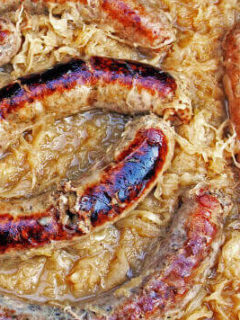
Wanting to prepare a traditional Bavarian dish in honor of Oktoberfest, I wandered through the Italian Market in search of sausage. From Cappuccio’s Meats, I purchased a pound of apple and cinnamon pork sausages, assured by the butcher they wouldn’t be too sweet.

While these South-Philly links unlikely resemble those served in German pubs, they work perfectly in this recipe: The cinnamon in the sausage pairs nicely with the grated apples and juniper berries in the braise. After 30 minutes of gentle simmering, the sauerkraut absorbs all of these flavors as well as all the juices from the sausage, becoming a tasty condiment for these hoagies.

And while I have only tasted one of the 12 seasonal beers I picked up at the Foodery — the Hofbraü, one of the six local beers served at the Munich festival — I think they all have been inherently designed to taste good with pork or any of the other Oktoberfest fare — roast ox tail, rotisserie chicken, spaetzle.

Heartier than a Pilsner but lighter than a Bock, the Hofbraü is a great fall beer, and tasted even better with my Bavarian hoagie. This Sunday, cheer the Eagles to their first victory while savoring braised sausage with sauerkraut and imbibing in an autumn-spiced Dogtoberfest (Flying Dog Brewery), a pumpkin-spiced Punkin (Dogfish Head Craft Brewery) or any of the other fun Oktoberfest brews.

Read all about the tradition of this renown Munich festival below:

Tapping a keg before a crowd of thousands at noontime tomorrow, the Lord Mayor of Munich will commence the festivities of Oktoberfest, a centuries-old tradition attracting revelers from across the globe. In the next two weeks, more than six million visitors will relish classic German fare such as sausages, sauerkraut, roasted ox tails and spaetzle, while enjoying traditional song and dance. Some will watch the legendary crossbow competitions, others the various parades, but all will celebrate the beer — a dark-colored, high-octane brew, made specially for the occasion.

The first Oktoberfest began on October 12, 1810, when the Bavarian Crown Prince Ludwig and Princess Therese organized a festival to commemorate their marriage. On a meadow outside the city gates, the citizens of Munich celebrated with singing, dancing and feasting, a five-day event ending with a large horse race. The townspeople named the field “Theresienwiese” (after the bride) or “Wiesn” for short, a term that has lasted for nearly 200 years.

As each successive festival became longer and more elaborate, the royal couple eventually pushed the start date back, taking advantage of the warmer September weather. Historically, however, Oktoberfest has always ended on a weekend in October.

Over the years, this occasion has deservingly earned the title the “Largest People’s Fair in the World.” Pitched across the 100-acre Wiesn, fourteen tents — some large enough to cover 10,000 seats — form a mini village. Under these tents, 12,000 employees including 1600 barmaids annually serve over 200,000 pairs of sausages, 450,000 rotisserie chickens, 100 roasted oxen and 6 million steins of beer.

Oktoberfest has not only inspired cities all over the world to organize similar festivals, but also breweries to create special concoctions, some honoring the “Marzen-style” brew, the style enjoyed by Germans at the original Oktoberfest. Marzen means March in German, and before the invention of refrigeration, March marked the last month beer could be brewed before the hot weather moved in. Brewers stored their beer in ice caves until October when the cool air returned, welcoming these brews and inspiring harvest festivals, the immortalized Bavarian wedding being one of them.

In 1872, the Munich brewery Spaten created the first Oktoberfest beer, and today, only six local breweries (Spaten, Augustiner, Paulaner, Hacker-Pschorr, Hofbraü and Löwenbräu) have permission to serve their seasonal brews at Oktoberfest. Each of these companies abides by the “Reinheitsgebot” or German Purity Law enacted in 1516, stipulating that beer may be brewed with only four ingredients: malt, hops, water and yeast.

In general, however, the numerous beers created each fall in honor of the festival tend to be amber in color, medium to full-bodied in alcohol, and malty in taste. Some Oktoberfest brews such as Sam Adams, Brooklyn Brewery, Stoudt’s, Saranac, Flying Dog and Flying Fish use only imported European ingredients (hops and malt). Some brewers age the beer slowly in the tradition of those made for the Munich festival, and others add seasonal flavorings: Weyerbacher Brewing Company of Easton adds pumpkin as well as cinnamon, nutmeg, cardamom and cloves to its Imperial Pumpkin Ale; and Dogfish Head Craft Brewery of Milton, Del., adds pumpkin and brown sugar to its Punkin Ale.

Sausage And Sauerkraut

1 tablespoon olive oil
4 fresh sausages*
1 onion, peeled and thinly sliced
10 whole juniper berries
kosher salt and pepper
1¾ cups chicken stock
2 lbs. sauerkraut, rinsed
2 apples, such as Granny Smith or Honey Crisp, peeled and grated
* Cappuccio’s on the Italian Market makes delectable homemade sausages (215.922.5792)
* The Fair Food Farmstand sells several wonderful varieties as well from Country Time Farm and Jamison Farm

Heat the oil in a 12-inch skillet over medium-high heat. Brown the sausage on all sides, then transfer to a plate. Add the onion and juniper berries and sauté until the onions are tender, about five to seven minutes, seasoning with salt and pepper to taste. Add the stock, sauerkraut and apples, and stir to combine, scraping any browned bits from the bottom of the pan. Nestle the sausage back into the sauerkraut mixture, bring to a simmer, cover and cook over low heat until the sausages are cooked through and some of the liquid has evaporated, about 25 to 30 minutes.

Serve with a variety of mustards and hoagie rolls if desired.

Korean Flank Steak and Chilled Soba

Most people go to Morimoto for sushi. For fatty tuna rolls and tuna belly sashimi, some aficionados will pay any price. Indeed, the sushi at this Stephen Starr, Iron Chef-run restaurant is arguably the best in the city.

I go to Morimoto, however, for something else. Morimoto’s cha-soba — chilled green tea soba noodles served with dashi-shoyu, a savory dipping sauce — cannot be found anywhere else in the city. Many sushi restaurants serve soba noodles, hot and cold, but few serve this green tea variety.

Cha-soba translates to tea-soba and describes the noodles, which are made with matcha (green tea powder) and buckwheat flour. Partly I enjoy the dish’s assembly — seaweed-green noodles nested on ice in a bamboo box arrive next to a bowl filled with the dashi-shoyu and a plate of sesame seeds, scallions and freshly grated wasabi — but mostly I love the chewy texture and distinct green tea flavor of the noodles.

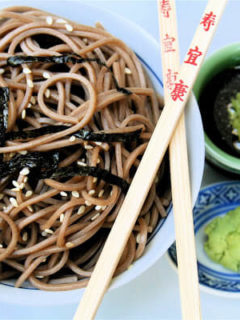
Chilled soba made with traditional buckwheat noodels:
Chef Masaharu Morimoto suggests, as communicated through his attentive servers, tasting the dashi, seasoning it with wasabi, dipping the noodles into the sauce and eating directly from the bowl. A combination of kombu (dried kelp seaweed) and bonito shavings (dried, flaked mackerel) steeped in mirin, soy sauce and water make the dashi, a flavorful and aromatic stock. Dipping the noodles, as opposed to dressing them, in a chilled broth spiked with fresh wasabi — a treat for any sushi lover — ensures a perfect ratio of sauce to noodle.

Ordered on its own, this dish, costing $12 a serving — although not the best deal for noodles in the city — makes a perfect summer lunch and when paired with sushi or grilled fish or steak, a side dish worth sharing at dinner. Cha-soba for me, like a toro-stuffed maki roll for most Morimoto patrons, induces a bliss matched by no other noodle-serving restaurant in the city.

And before I went green, I used to enjoy — adore — Morimoto’s kobe beef carpaccio: thin slices of delectable, tender meat, rubbed with ginger and garlic and seared with a hot sesame-olive oil mix. Now, however, I don’t know how I feel about kobe beef. Is it grass fed? I really don’t know enough about the treatment of kobe beef cows, but I do know that the grass-fed beef from Livengood Farm in Lancaster is delicious. All who enjoyed the grass-fed hamburgers for the Fourth of July can attest. This marinade for flank steak (grass-fed, purchased from Livengood’s at the South and Passyunk Farmers’ Market this past Tuesday) can also be used for skirt or hanger steak.

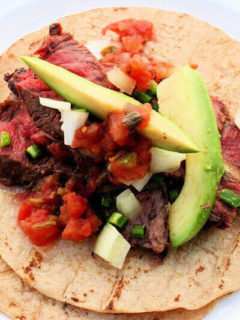
Like Morimoto’s carpaccio, this steak recipe has tons of ginger and garlic. The sugar in the marinade helps the meat char nicely on the grill and the soy sauce balances the sweetness. The Asian flavors in this Korean-style flank steak makes it a perfect entrée to serve with the chilled soba.

Grass-fed cows at the Livengood Family Farm in Lancaster, PA:
Korean-Style Flank Steak
Serves 4

¼ C. sugar
¼ C. + 2 T. soy sauce
1 T. + 1 tsp. mirin
6 large cloves garlic, minced
6 scallions, white part only, minced
1-inch knob fresh ginger, finely chopped
1 T. + 1 tsp. sesame oil
1½ lbs. flank steak
oil for greasing
kosher salt to taste

Whisk together the sugar, soy, mirin, garlic, scallions, ginger and sesame oil until smooth. Transfer to a resealable plastic storage container or a Ziploc bag. Place the meat and let marinate for 3 to 4 hours or overnight.

Preheat the grill to high. Remove steak from marinade and discard. If meat has marinated overnight, season it very lightly with salt or not at all . If meat has marinated for just a few hours, season lightly with salt. Grease the grill grates with oil.

For flank steak about 1-inch thick, grill four minutes on one side. Flip, grill three minutes on the other side for medium rare. Remove from heat and let rest 10 minutes before slicing across the grain.

Chilled Soba Noodles with Dashi-Shoyu
Adapted from Sally Schneider, A New Way To Cook, (Artisan, 2001)
Serves 6

½ oz. kombu (kelp seaweed)
2½ C. water
½ oz. dried bonito shavings
½ C. mirin
½ C. soy sauce or tamari
12 oz. soba noodles or green tea soba noodles
wasabi powder
1 bunch scallions, thinly sliced
sesame seeds
1 sheet nori, cut into thin strips

Place the kombu and the water in a small saucepan. Bring to a gentle simmer. After one minute, remove the kombu and discard. Remove the pan from the heat, add the bonito shavings and do not stir. When the bonito has sunk to the bottom, after a minute or two, strain the broth through a fine strainer, pressing on the bonito shavings with a spatula to extract all the liquid, then discard.

In a small saucepan, bring the mirin to a boil. Add the kombu broth and the soy sauce and simmer for 4 minutes. Remove from the heat, allow to cool, then refrigerate until chilled.

Bring a large pot of water to a boil. Add the noodles and cook until al dente, about 4 minutes. Drain and rinse under cold water or plunge into an ice bath. Drain and set aside.

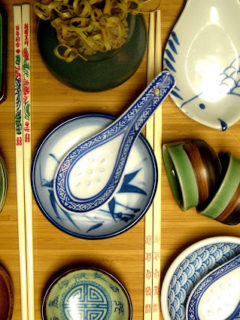
When ready to serve, mix wasabi powder with water to make a paste and set aside. Place all of the garnishes — scallions, sessame seeds, nori and wasabi — in separate bowls. Divide the noodles among six plates. Pour the dashi-shoyu into 6 small bowls large enough to handle a serving of chosptick-filled noodles dipped inside, (much larger than what is pictured.) Give each diner a bowl of noodles and sauce and let them garnish their noodles as they please.

Grass-Fed Beef

When I stopped by the Fair Food Farmstand last Thursday to pick up my CSA, I picked up a package of grass-fed ground beef as well. Before reading The Omnivore’s Dilemma (Michael Pollan, 2006), I didn’t know that cows are natural herbivores and until recently ate grass primarily.

The switch from feeding cows grass began in the 1950s, after farmers discovered how to grow corn cheaply and efficiently with the help of artificial fertilizers. When this discovery led to the creation of large surpluses, however, the excess corn traveled to ranches. And when ranchers discovered how quickly cows could grow on a corn-based diet, they moved cows from the pastures into feedlots and fed them this energy-packed grain. Both parties profited: farmers from solely growing corn; and ranchers, by raising cattle indoors with that corn.

Although grain-fed cows produced well-marbled meat — a highly desired product by all meat-lovers — the meat also became less healthy, and the practices employed to create the meat, less humane. The ethical and environmental concerns surrounding feedlots have been widely voiced, particularly because cows, living in cramped quarters on unfamiliar grain diets (which their ruminant stomachs have difficulty digesting), receive hormones, supplements and antibiotics to promote growth and protect against diseases — drugs never needed when cows fed on grass. Furthermore, when manure is not spread across the land by grazing cattle, but instead dumped in large quantities, the soil becomes overloaded with nitrates, which in turn run off and pollute nearby waters.

Grass-fed meat is far superior nutritionally than grain-fed meat. Grass-fed meat not only is lower in total and saturated fat, but also contains 75 percent more omega-3 fatty acids, 78 percent more beta-carotene, 300 percent more vitamin E, 400 percent more vitamin A and 500 percent more conjugated linoleic acids (CLA) than grain-fed cows.

To read more about the health benefits of grass-fed beef and the practices of raising cattle on corn visit Eatwild.com.

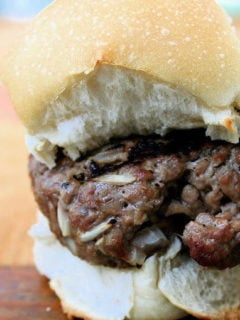
Grass-fed beef has been dismissed as bland and oddly textured by many meat lovers. Although I haven’t tasted many cuts of grass-fed meat, I love the grass-fed ground beef I buy from the Fair Food Farmstand. My friend and I enjoyed delicious grilled burgers last Thursday evening. We seasoned the meat with kosher salt before forming the patties and mixed in a finely chopped onion as well. On a crusty roll with lettuce and tomatoes, these pasture-perfect patties are pleasantly pleasing.

CSA Week Three:
1 lb. baby lettuces
1 bunch French breakfast radishes
2 heads baby bok choy
1½ lbs red Russian Kale
1 bunch dandelion greens
1 head Jericho Romaine
1 bunch scallions
1 head green leaf lettuce

Grass-fed Burgers
Yield = 3 burgers

1 lb. grass-fed ground beef
½ medium onion finely chopped
kosher salt
freshly ground black pepper

buns, lettuce, tomato, cheese as needed

Spread the ground beef out in a large bowl. Season evenly with kosher salt. Spread the onion across the meat evenly as well. Gently mix the mixture, then form into 3 patties, being careful not to pack the meat or mix the meat too much. Chill the patties until you are ready to grill.

Preheat a grill to high. Season patties on both sides with kosher salt and pepper. Grill to desired doneness.

A St. Patrick’s Day Feast

Celebrate St. Patrick’s Day with a feast featuring three of Ireland’s most renowned products: Guinness, Cashel Blue cheese and McCann oats. While I have been familiar with Guinness and steel cut oats for years — I prepare the oatmeal recipe below almost every morning — I only learned of Cashel Blue these past few weeks while researching Irish cheeses. For the past month at DiBruno Brothers, the cheese mongers have been luring customers to a table showcasing five Irish cheeses: Gubbeen, Durrus, Coolea, Adrahan and Cashel Blue. I happily tested all of them, and although I must admit that I am easily pleased by any variety of a cheese, each was truly delicious. I am partial to blue cheese, however, and the Cashel was my favorite: it melts nicely, and makes a nice snack on crisp toasts, as in the recipe below, but is also wonderful on its own, at room temperature, spread onto soft bread or crackers.
Happy St. Patrick’s Day!


Cashel Blue

In the late 18th century the Grubb family, members of an Anabaptist sect, fled to Ireland from England, to avoid persecution. They settled in Tipperary, a town in south-central Ireland, and became millers and buttermakers. A descendant of the family, Louis Grubb, and his wife Jane continued the dairy tradition with their creation of Cashel Blue cheese in 1984. Made from the highest quality milk taken mostly from the cows on their farm, a herd of Friesian dairy cattle, Cashel has received countless honors and awards. Creamy, tangy, salty and sweet, Cashel Blue is truly a treat.


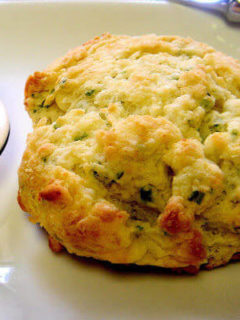
These biscuits take only minutes to make and freeze beautifully. (Place unbaked biscuits on a cookie sheet and place in the freezer for 30 minutes, then transfer to a Ziplock bag. It may be necessary to increase baking time by 2-3 minutes.) Also, for a simple plain buttermilk biscuit, omit the cheese and herbs, increase the salt to ½ teaspoon, and increase the sugar to 2 tablespoons. For a festive treat, however, the Cashel Blue and chives are a wonderful addition.

Buttermilk Biscuits with Cashel Blue Cheese and Chives
Yield = 10 biscuits

2 cups all-purpose flour
2¼ teaspoons baking powder
¼ teaspoon baking soda
¼ teaspoon kosher salt
1 tablespoons sugar
8 tablespoons cold unsalted butter
3¼ oz (a scant cup) Cashel Blue cheese
¾ cup + 1 tablespoon buttermilk
3 tablespoons finely chopped chives
2 tablespoons melted butter for brushing

Preheat the oven to 400ºF.
In a large bowl, whisk together the flour, baking powder, baking soda, salt and sugar. Cut the butter into the flour and using a pastry cutter or fork, mix the butter and flour until the butter has broken into small bits and flakes. Crumble the blue cheese into the mixture and toss to coat.
Whisk the ¾ cup buttermilk with the chives then pour mixture into flour mix. Stir just until the dough comes together to form a mass — Do not over-mix. With lightly floured hands, gently knead the dough in the bowl to bring together, adding the extra tablespoon of buttermilk if necessary, then turn out onto a lightly-floured work surface. Pat the dough into a ¾ – inch thick rectangle. Using a 2½ -inch round cutter, cut the biscuits and transfer to an ungreased baking sheet, spacing the biscuits 2-inches apart.
Brush each biscuit with melted butter and transfer sheet to the oven, immediately increasing the temperature to 425ºF. Bake the biscuits for 15 minutes or until golden. Remove from oven, transfer biscuits to wire rack for 2 minutes before serving.


A nice snack: Blue Cheese Toasts Drizzled with Lavender Honey

To make the toasts, cut a baguette into ¼ – inch thick slices, place on a cookie sheet, drizzle with olive oil and bake at 400ºF for 8-10 minutes until golden. Remove from the oven, top with a generous portion of Cashel Blue and return to the oven for 3-5 minutes until melted. Meanwhile, place 1 tablespoon of lavender honey in a shallow bowl and submerge bowl into another bowl filled with hot water to help loosen the honey. When the cheese has melted, remove toasts from the oven, drizzle with honey and enjoy immediately.


Sautéed Cabbage and Radicchio with Bacon and Cashel Blue Cheese
Serves 4 as a side dish

1½ oz bacon, cut into ½-inch pieces
1 small head cabbage, halved, cored and thinly sliced
kosher salt and pepper to taste
1 small head radicchio, halved, cored and thinly sliced
3 tablespoons balsamic vinegar
1 teaspoon sugar
2 oz Cashel Blue cheese

Place the diced bacon in a large nonstick skillet, cover, and cook over low heat for five minutes. Remove the cover, stir and raise the heat to medium-high. Cook for another five minutes or until the bits of bacon are beginning to crisp and brown. Remove bacon with a slotted spoon and transfer to a plate. Add the cabbage, and season with salt and pepper to taste. Cook for about five minutes or until the cabbage is slightly tender. Taste to test its texture, and cook a few minutes longer if necessary. Add the radicchio, and using tongs, mix it with the cabbage. Add the balsamic and sugar and cook until the vinegar has reduced and the radicchio has wilted, about 2 minutes longer. Remove from the heat, stir in the reserved bacon bits and serve. Sprinkle the Cashel Blue evenly on individual servings.


Guinness Draught

In 1759, shortly after signing a 9,000-year lease at £35 a year, Arthur Guinness began brewing ales from St. James’s Gate Brewery in Dublin, Ireland, a site that has since become Dublin’s most popular tourist attraction. Today, Guinness is Ireland’s best selling alcoholic drink and is one of the most successful beer brands in the world.
A dry stout, based on the porter style that originated in London in the early 1700s, Guinness is recognized by its thick, creamy, tan-colored head and its distinct roasted-barley flavor. A versatile beverage, Guinness complements both sweet and savory dishes as illustrated by these two recipes for Chocolate Guinness cake and Guinness-braised short ribs.


Guinness-Braised Short Ribs
Serves 4

3 lb short ribs (long cut), cut into 2-inch pieces
kosher salt and freshly ground black pepper
2 tablespoon olive oil
1 leek, stem removed
1 medium onion, peeled
2 medium carrots, peeled
1 cinnamon stick
1 tablespoon tomato paste
2 11-oz bottles of Guinness
2 cups chicken stock, preferable homemade
zest of one orange
zest of one lemon
4-5 sprigs of thyme
1 bay leaf

Preheat the oven to 300ºF.
Place a large oven-safe soup pot or Dutch oven over high heat. Season short ribs generously with salt and pepper. Add 1 tablespoon of the oil to pot, let heat for a few seconds until almost smoking, then add the meat skin side down. Let brown for about five minutes, flip, and brown other side for another five minutes.
Meanwhile, cut the leek into big chunks and soak in a bowl of cold water, separating the layers to make sure each is well cleaned. Roughly chop the onion and the carrot into medium-large pieces. This should yield about 3 cups leeks, and 2 cups each of carrots and onions.


When the ribs have finished browning, remove from pan and place on a plate. Drain off all fat and discard. Heat remaining tablespoon of olive oil over high heat and add the vegetables and cinnamon stick. Season with salt and pepper to taste and let cook undisturbed for 2 minutes, then stir. Let vegetables sauté for 8-10 minutes. Add the tablespoon of tomato paste and stirring to coat the vegetables.
Deglaze the pan with the Guinness and the chicken stock, scraping browned bits from bottom of pan. Add the zests, thyme sprigs, bay leaf and short ribs, and bring pot to a boil. Reduce the heat so that the liquid is just simmering, cover and place in the oven.
Braise for 2 hours. Remove pan from oven and test one of the short ribs. If the meat is very tender and nearly falling off the bone, the ribs are done. If not, return the pot to the oven, testing every 15 minutes until done.
Remove the ribs from the liquid to a bowl or plate. Strain the braising liquid, discarding the solids. Pour liquid into tall narrow vessel and let chill in refrigerator for at least 10 minutes. Skim fat from surface and discard. Return ribs to pan, cover with liquid and bring back to a simmer. Serve immediately.
Note: Can be made three days in advance.


Chocolate Guinness Cake
Adapted from Nigella Lawson’s “Feast”
Hyperion (2004)

1 cup Guinness
1 stick + 2 T. butter
¾ cup unsweetened cocoa powder
2 cups sugar
¾ cup sour cream
2 eggs
1 T. vanilla extract
2 cups all-purpose flour
2½ teaspoons baking soda
1 teaspoon kosher salt

8 oz cream cheese, softened
1¼ cups confectioners’ sugar
½ cup heavy cream

Preheat the oven to 350ºF. Butter a 9-inch springform pan.
In a medium saucepan, heat Guinness with butter until butter is melted. Remove from heat and whisk in cocoa powder and sugar. Whisk sour cream with the eggs and vanilla, then pour into Guinness mixture and stir until smooth. Whisk together flour, baking soda and salt, then add to batter, stirring just until combined.
Pour into prepared pan, and bake for 45 minutes. Test cake with a toothpick or paring knife. If utensil comes out cleanly, remove cake from oven. Let cool completely in pan.
Beat cream cheese until light. Add sugar. Add cream and beat until thick. If cream cheese mix is too soft to spread onto cake, let chill for 10 minutes or until firm
Spread cooled cake with cream cheese frosting.


John McCann’s Steel Cut Oats

Ireland’s fertile plains, humid climate and clean rivers have enabled it to grow high-quality oats since the fifth century. In 1800, John McCann built a mill on the east coast of Ireland in the town of Beamond, and began making steel cut oats. Several years later, in 1851, his product received two quality of excellence awards from exhibitions in London and Dublin, followed by first prize at the Philadelphia Exhibition in 1876 — an honor still proudly printed on its old-fashioned tin can.
Steel cut oats are whole grain groats that have been cut into small pieces. They are an excellent source of complex carbohydrates and protein, containing twice as much protein as brown rice, and 50 percent more than bulgur. Moreover, steel cut oats are nuttier and chewier than rolled oats, and create a creamier, more flavorful oatmeal. Low in fat and a great source of cholesterol-lowering soluble fiber, steel cut oats make a delicious and nutritious breakfast.


Steel Cut Oatmeal with Medjool Date and Cinnamon
Serves 1

¼ cup skim milk
¾ cups water
pinch of kosher salt
¼ teaspoon cinnamon
¼ cup steel cut oats
1 Medjool date
1 banana
granola for crunch (optional)

In a medium saucepan, bring milk, water, salt and cinnamon to a boil. Reduce heat to low, add oats and stir. Gently simmer, stirring every five minutes for about 21-23 minutes. Watch closely at the end — add a splash of water or milk if oatmeal sticks to bottom of pan.
While oatmeal cooks, finely dice the date and slice the banana. Place fruit in a bowl, top with the cooked oatmeal and stir to combine. The date and the banana should sweeten the oatmeal sufficiently, but add a touch of sugar, brown sugar or honey if necessary. Top with granola if desired.

Stir-Fried Quail with Balsamic Caramel, Basil & Wilted Frisée

I could eat this balsamic caramel with anything: fresh strawberries, vanilla ice cream, sliced tomatoes, or shaved Parmigiano Reggiano. I recently spotted the recipe in my new Sally Schneider cookbook, “The Improvisational Cook,” and lamented not having discovered it a few weeks ago when I was attempting to recreate the “Alta” Brussels sprouts—this formula resembles that of the restaurant’s much more closely. Schneider’s version, just as simple to prepare, tastes like the thick, aged, artisan balsamics available in specialty stores for fifty dollars a bottle. I’ve now enjoyed this molasses-textured glaze drizzled over pan-seared duck breasts and grilled skirt steak. When the balsamic caramel is paired with basil, however, as in this stir-fried quail dish, the combination is especially delicious. Here I’ve used sturdy frisée as the base for this salad, which loses much of its bitterness when wilted under the heat of the quail. Once in the pan, the quail takes no more than five minutes to cook making this elegant salad of wilted greens, goat cheese, toasted pine nuts and orange segments simple and easy to prepare. Enjoy!

Stir-Fried Quail with Balsamic Caramel and Wilted Frisée
Serves 2

Balsamic caramel:
½ cup Rainwater Madeira
1 cup commercial balsamic vinegar
2 teaspoons dark brown sugar

Balsamic Vinaigrette:
2 tsp. honey
kosher salt and freshly ground pepper to taste
1 clove garlic, minced
1/4 cup balsamic vinaigrette
6 tablespoons grapeseed oil

1 package semi-boneless quails (or 4 each)
kosher salt and pepper to taste
2 tablespoons butter
1 large bunch fresh basil, roughly chopped

1 head frisée, (enough for 2 people)
2 oz goat cheese, crumbled
2 tablespoons toasted pine nuts
1 orange, peeled and sectioned, preferably removed from its pith

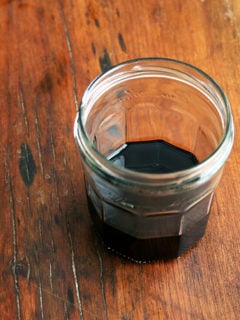
To make the caramel, place Madeira in a small saucepan and simmer over medium heat until reduced to about 1 tablespoon. Add the balsamic vinegar and boil until the vinegar has reduced to about ¼ cup and is very syrupy and big shiny bubbles are forming at the surface. Watch the mixture very closely at this point—it will burn very easily. If it appears too thin, be assured that it will thicken upon cooling. Remove from the heat and stir in the brown sugar until dissolved. Pour into a clean jar and cool before using.

To make the vinaigrette, whisk together the honey, salt, pepper, garlic and balsamic vinegar in a small bowl. Slowly drizzle in the oil, whisking constantly. Taste, adjust with more salt, pepper or oil if necessary. Store until ready to use.

Remove quail from package and cut each into four sections: remove each leg from the body then split the breast down the middle into two pieces. Season liberally with salt and pepper.

In a large non-stick skillet over high heat melt the butter till hot and bubbly. When it is about to turn brown, add the quail pieces, skin side down first. Let the quail cook undisturbed for 1-2 minutes. Flip and cook for about 2 minutes longer.

Meanwhile, place frisée, goat cheese, pine nuts and orange segments in a bowl. Toss lightly with some of the vinaigrette, err on the side of under-dressing—the frisée will release moisture when wilted and the salad will ultimately be flavored with the balsamic caramel as well.

Arrange frisée mix on a large platter, or keep in the bowl (the platter is only for presentation purposes). When the quail is finished cooking, drizzle 2 tablespoons of the balsamic caramel into the pan then throw in all of the chopped basil. Immediately remove the pan from the heat and transfer the quail to the frisée platter, arranging the pieces on top of the greens, so that it wilts nicely. Serve immediately with a crusty baguette.

Steak Frites with Aioli

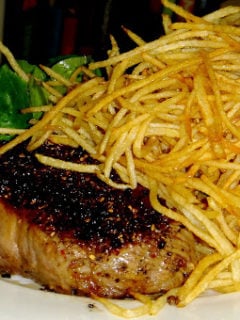
Last night my husband and I had the pleasure of dining at Monk’s for the first time since the institution of the smoking ban. What a treat! Unspoiled by oppressive smoke, our Belgian ales and pommes frites with bourbon mayonnaise tasted exceptional. If you have a deep-fryer at home, recreating this classic bistro fare is quite simple; if you don’t, the process of frying the potatoes will just be slightly more involved. As for the bourbon mayonnaise, we were only able to coax our waitress to reveal a few ingredients–bourbon, mayonnaise, garlic and jalapenos–the rest is the chef’s secret. I’ve supplied a recipe for a spicy aioli, which is delicious with frites and a little less creamy tasting than Monk’s famed condiment. The aioli recipe yields more than enough for two servings of frites and will keep for weeks in the refrigerator. Enjoy!

Steak Frites with Aioli
Serves 2

2 egg yolks
2 T. Dijon mustard
2 cloves garlic
3 T. capers
2 tsp. fresh lemon juice
1 tsp. Sriracha*
1 tsp. red wine vinegar
½ tsp. Worcestershire sauce
½ tsp. kosher salt
½ cup grapeseed oil
½ cup olive oil (not extra-virgin)
* (available at Asian markets, or use ½ tsp. cayenne pepper)

1 tsp. black peppercorns
1 tsp. Szechwan peppercorns*
1/2 tsp. white peppercorns
1/2 tsp. red peppercorns
* If you can’t find Szechwan peppercorns or red peppercorns, just use a mix of black and white
1 tsp. olive oil
kosher salt
2 New York Strip Steaks, 1-inch thick
1 tsp. canola oil

4 cups peanut or canola oil for frying

1 Idaho potato
¼ cup all-purpose flour
kosher salt to taste

To prepare the aioli: combine yolks, mustard, garlic, capers, lemon juice, Sriracha, vinegar, Worcestershire and salt in a blender or food processor. With motor running, slowly drizzle in the grapeseed oil followed by the olive oil—drop by drop at first, and then more quickly once you see the mixture begin to emulsify. Taste, adjust seasoning with more salt if necessary, and chill until ready to use. Will keep for 2 weeks in the refrigerator.

To prepare the pepper rub, toast all of the peppercorns over medium-high heat in a small heavy skillet. After about 2-3 minutes, when the mixture is fragrant, transfer mixture to a spice grinder and coarsely grind. Pat the steaks dry, rub each side with the oil, then rub the peppercorn mixture all over each side. Sprinkle each side with kosher salt and set aside.
Preheat the oven to 450˚F only if you prefer your steak cooked more than rare. Heat a heavy oven-safe nonstick skillet or cast iron pan over high heat. Add the teaspoon of canola oil, swirl around, then add the steaks. Let cook 3-4 minutes on one side. Flip and cook for another 3 to 4 minutes for rare. If you prefer your steak more well-done, transfer skillet to oven and cook until desired temperature is reached. Transfer the steaks to a cutting board and let rest for 5 minutes. While the steak rests, cook the frites:

Heat oil in heavy, straight-sided pot till 375˚F or preheat your deep-fryer. Meanwhile, peel potato and julienne on mandoline. Place potato strips in a bowl and lightly coat and toss with half of the flour. If not all of the pieces are lightly coated, use the additional flour. When oil is ready, gently lower potatoes into oil with a spider or clean bowl—don’t dump the potatoes in using the same bowl in which they were coated with flour. When potatoes are crisp and golden, remove from oil with spider or tongs, let drain slightly and sprinkle to taste with kosher salt.

Serve immediately with aioli.