Category Archives: Lunch

More American Tuna, Eggs & Whole-Grain Muffins

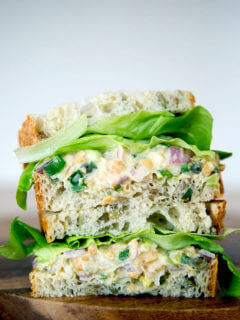
So, I am happy to report that the American Tuna I recently smothered with cheese and wedged between two pieces of buttered bread tastes just as delectable when prepared in a healthy manner. These open-faced sandwiches, made with the same tarragon-tuna salad prepared for the tuna melt plus a couple tablespoons of capers, make a very tasty, light lunch or dinner. Toasted olive bread is an especially nice base.

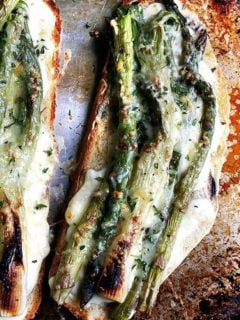
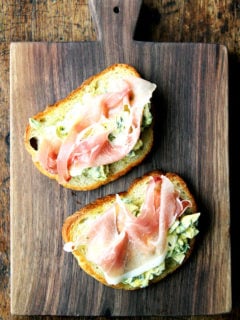
Additionally, I must report my latest egg preparation: soft-boiled. Yum. The recipe I followed produced perfectly colored and textured soft-boiled eggs. I’m not sure I’m crazy about the method, however, which calls for submerging the eggs in cold water, which makes the eggs, as expected, cold. In any case, soft-boiled eggs atop asparagus, prosciutto and mascarpone-slathered toasts make another great open-faced sandwich.

Lastly, down below, you’ll see another batch of the whole-grain muffins I made several weeks ago. In this batch, mashed bananas and pecans have replaced the Fuji apples.

Asparagus Toasts with Mascarpone, Prosciutto & Soft-Boiled Eggs. To make these toasts, preheat the oven to 400ºF. Slice a loaf of french bread into four 1/2-inch thick pieces. Place on a baking sheet, drizzle with olive oil and toast until golden. Meanwhile, place four eggs in a small saucepan. Cover with cold water, bring to a boil and simmer for five minutes. Plunge the eggs into cold water. After three minutes, peel and slice the eggs. Meanwhile, bring a large pot of water to a boil. Blanch one bunch of asparagus for 30 seconds. Spread the toasts with a spoonful of mascarpone cheese. Top each with a slice of prosciutto, a few pieces of asparagus and the sliced eggs. Season with salt and pepper to taste. Serves 4.

Open-Face Tuna Salad Sandwiches
Serves 4

1 loaf of olive bread
extra-virgin olive oil
2 tablespoons mayonnaise
1 teaspoon Dijon mustard
juice of half a large lemon (about 1½ tablespoons)
kosher salt
freshly ground black pepper
1 6-ounce can American Tuna
¼ cup finely diced red onion
¼ cup chopped tarragon
2 tablespoons capers
1 tomato, thinly sliced
1 small bunch lettuce

1. Preheat the oven to 350ºF. Slice the olive bread into four thin rounds. Place on a cookie sheet, drizzle with the olive oil, and bake until golden brown, about 10 minutes. Remove from oven and let cool.

2. Meanwhile, make the dressing: Whisk the mayonnaise with the mustard and lemon juice. Season with a pinch of salt and pepper to taste. Dressing will be thin. Taste, adjusting seasoning as necessary.

3. Place tuna in a large mixing bowl. Add the onion, tarragon and capers. Pour dressing over top and combine mixture gently with a fork. Set aside.

4. Assemble sandwiches: Line bread rounds with tomatoes. Top each with a small handful of lettuce. Top each with a mound of the tuna salad. Cut in half, if desired. Serve.

The 100% whole-grain muffins pictured below are filled with mashed ripe bananas and crunchy pecans. As FarmGirl promised, this recipe can be adapted in countless ways.

American Tuna

As I mentioned a couple of days ago, I’ve made a new discovery: American Tuna. Now, before you (mom) start freaking out that “women of child-bearing years should not be eating tuna,” give me a minute to explain. This tuna, caught in the Pacific Northwest, is young albacore tuna and unlike most of the tuna caught today, hasn’t had time to accumulate many toxins. Older albacores, blue fins and yellow fins — the varieties most often packed into cans today — can be over 40 years old and pose the biggest risk to consumers.

Let me tell you a little about this company, too. Six families make up the American Tuna fishery, which is based out of San Diego. Every June, the American Tuna fleet (five boats) departs the Port of San Diego and heads to the Pacific Northwest. These fishermen, each equipped with little more than a fishing pole, reel in young albacore tuna one at a time. (If you have a moment, visit the American Tuna Web site and watch them in action — it is amazing!) When their boats are filled, they deliver the tuna to canneries located along the coasts of Oregon and Washington. The fleet does not return to San Diego until November.

At the canneries, the fish are hand-filleted, hand-packed, canned and sealed. The tuna is cooked in the can in its own juices. Most canned tuna today has been cooked (often two or three times) as a whole fish and mixed with soy products, vegetable broth, pyrophosphate, salt, water and/or oil before being canned. American Tuna, in contrast, contains one ingredient: albacore tuna. (In the flavored varieties, however, garlic, jalapeno and salt are added in small quantities.)

American Tuna contains more omega-3 fatty acids than conventional brands. A two-ounce serving of American Tuna provides 2.6 grams of omega-3 fatty acids whereas a two-ounce serving of Starkist tuna provides 0.36 grams of omega-3 fatty acids. What accounts for the dramatic difference? Young albacore living in the cold waters of the Pacific Northwest have more body fat and therefore a higher amount of omega-3 fatty acids. When they migrate to warmer waters, they lose their body fat along with many of these beneficial nutrients.

What else can I say about this company? Oh, they belong to the American Albacore Fishing Association (AAFA), a family-run, 21-boat association operating out of San Diego, which the Marine Stewardship Council (MSC) recently certified as a sustainable fishery, making it the first and only tuna fishery in the world to bear this eco-label. MSC is an independent organization that promotes responsible fishing practices. Moreover, the Monterey Bay Aquarium’s Seafood Watch places North Pacific troll- and pole-caught tuna (such as American Tuna) on its “best choice” list.

If you are interested in learning more, read on: Tuna, At Last, Without All The Guilt, The Bulletin

Whole Foods Markets nation wide carry American Tuna.

Oh, and this tuna melt, packed with tarragon, was amazing.

Tarragon Tuna Melt
Serves 4

2 tablespoons mayonnaise
1 teaspoon Dijon mustard
juice of half a large lemon (about 1½ tablespoons)
kosher salt
freshly ground black pepper
1 6-ounce can American Tuna
¼ cup finely diced red onion
¼ cup chopped tarragon
1 loaf of bread, bakery-style French or Italian
softened butter
1 tomato, thinly sliced
1 small bunch arugula
grated cheddar cheese

1. Make the dressing: Whisk the mayonnaise with the mustard and lemon juice. Season with a pinch of salt and pepper to taste. Dressing will be thin. Taste, adjusting seasoning as necessary.

2. Place tuna in a large mixing bowl. Add the onion and tarragon. Pour dressing over top and combine mixture gently with a fork. Set aside.

3. Slice bread into eight rounds. Spread one side of each with the softened butter. Turn bread butter-side down. Begin assembling sandwiches: Place a small handful of arugula on four of the rounds. Top each with a mound of the tuna salad. Top tuna with tomato slices. Top tomato with cheese. Cover with bread.

4. Heat a large nonstick skillet or griddle over medium heat. When hot, add a small dab of butter, then place sandwiches on the cooking surface. Cook until golden brown. Carefully flip each one, and cook on other side until golden brown.

5. Remove from heat, cut in half, and serve.

Purchase American Tuna at your local Whole Foods Market.


Quesadilla Trouble

I realized today that I don’t know how to make a quesadilla. This is what I did: I briefly warmed two soft, corn tortillas in a dry nonstick pan. Then, I took them both out of the pan and covered one with grated cheese and one half of an avocado thinly sliced. I put a little oil in the pan. I covered the cheese and avocado with the remaining tortilla, and placed the whole thing in the frying pan. I weighed down the tortillas with a nonstick pan and ate the remaining half of the avocado sprinkled with salt — best snack ever — while I waited for my quesadilla to finish cooking.

Now, it wasn’t that my quesadilla didn’t taste good, it was just that it tasted different. Maybe it was because I used corn tortillas (from Trader Joe’s, which are delicious … thanks for the tip Aunt Vicki) instead of flour? Maybe it was because the cheese I bought, a pre-grated mix called Quatro Frommagio, didn’t melt very well? Maybe it was because I got impatient and took the quesadilla out of the pan as soon as I finished eating my avocado? I don’t know, I can’t figure it out. I have not supplied a recipe since you likely know how to make a quesadilla better than I.

Grass-fed Flank Steak, Not Local, But Tasty

Last weekend I made my first visit to a Whole Foods Market since arriving on the West Coast. After a long visit at The Getty — my dad has serious endurance when it comes to art — we drove home along Pacific Coast Highway and stopped in Long Beach to pick up dinner. Exhausted from the day, my dad stayed in the car for a snooze.

Inside, I spotted a fairly large selection of grass-fed beef in the meat department. Though the man behind the counter did not know where the meat originated, I bought two slabs of flank steak. I have since learned it comes from Nebraska. I know, I’m a total hypocrite.

For dinner, we kept preparations very simple. Ben seasoned the meat with salt and pepper and threw it on the grill. As my dad worked his way through a wedge of Stilton, I prepared an arugula salad and sliced up some avocados. Dinner was ready in no time.

We all really loved the steak. Grass-fed meat is noticeably different than corn-fed. Its color, at all stages of doneness (rare, medium-rare, etc.), is a lighter shade of pink. Its smell, before cooked, is different too, earthy perhaps? And it tastes, well, grassier? It’s hard to describe. Ben said the meat tasted like an egg, and I don’t think that’s just because he has been eating a lot of eggs these days. Anyway, the steak was delicious. Too bad it’s not local.

And, for a change, Ben had some more desirable leftovers to bring to work this week. Piled in between two slices of whole wheat bread, slathered with mustard and mayo, and topped with arugula and cheddar cheese, flank steak makes a great sandwich — a vast improvement over the mixture of chard and brown rice Ben often zaps in the microwave for lunch.

Also, I’m having some technical difficulties with Google docs right now, but The Bulletin can be read here: Feeding A Marine

Grilled Flank Steak & Leftover Sandwiches
Serves 3 for dinner, with meat for leftover sandwiches

2 smallish-sized slabs grass-fed flank steak
kosher salt freshly ground black pepper

For the sandwiches:
arugula
whole wheat bread
Dijon mustard
mayonnaise
cheddar cheese
black pepper

For dinner:
1. Preheat the grill to high. Season meat on both sides with salt and pepper. Grill three to four minutes a side, depending on thickness. Let rest five minutes before slicing thinly against the grain.

For lunch:
2. If you are reading this blog, you likely know how to make a sandwich.

Grilled Cheese, The Mission & A Petting Zoo

Yesterday, around 12:30, I found myself in San Juan Capistrano with an hour to spare. I considered all my options: feeding the goats at the Petting Zoo; dining at The Ramos House Café; or visiting The Mission. As I approached the railroad tracks, however, I spotted a new café, Blendz, and walked in to check it out.

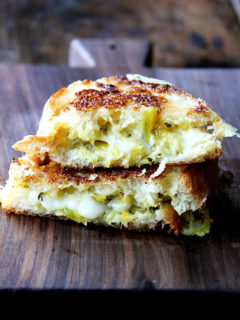
Now, I have to admit, I’m sort of going through an anti-fine dining phase. I’m not into the smoked sundried tomato pestos and lemon-basil aiolis right now. Sometimes I just want a sandwich. Anyway, Blendz offers salads, smoothies, paninis, and apart from its “intoxicating champagne dressing” basically keeps things pretty simple. I ordered the kids grilled cheese, made with a combination of Monterey Jack and cheddar, and was very pleased — no tapenades; no pestos; no vegetables. Just plain grilled cheese pressed on a panini machine. Yum.

Let’s see. Not much else too report. Here’s the second article in The Bulletin series: Ten Days

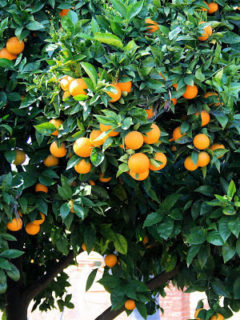
This is just one of many beautiful citrus trees inside the Mission San Juan Capistrano. Tomorrow, the Mission is celebrating the return of the swallows. Come visit!

Lunch At Cafe Mimosa After Monthly Bout With Verizon Wireless

It happens every month. When I see that red and white envelope in my mailbox, my heart begins to race, my blood pressure rises and my face turns red. Before even opening the envelope, I key in the customer service number — 888.294.6804 — one I have perforce committed to memory. After tearing into the envelope, I zero in on the total, then hit send.

And that’s how it goes. For about 30 minutes a month, I turn into a monster, screaming at the poor soul at the other end of the line, demanding “to speak with a manager!” It’s really sort of embarrassing, but I can’t help it — something is always wrong. And I don’t just dispute overage minutes either. I challenge when they inexplicably change my monthly text-message allowance; when they charge me doubly for in-calling; and when they lose checks — two now — and then ask me — twice now — to fax my bank statement proving the check’s clearance. AHHHHHHHHHHHHH!

Every month I swear upon switching services the next available chance. Unfailingly, however, I get convinced to sign on for another year or two. I have now been an unhappy Verizon Wireless customer since 2002, and the end is nowhere in sight.

Anyway, lunch at Café Mimosa proved the perfect antidote to my near heart attack on Avenida Del Mar outside the library. I could barely see straight, let alone read, so I ordered the first sandwich I saw, a vegetarian panini. One bite into this pressed sandwich, spread with artichoke tapenade, filled with perfectly roasted — al dente — vegetables and melted with Asiago cheese, and I felt my nerves calm, the customer service man who suggested I switch to on-line bill pay, a distant memory.

I have now had several enjoyable experiences at Café Mimosa. Last Friday, I walked over and ordered a delectable bowl of lentil soup and a pot of Chamomile tea. As I made my way out the door, I eyed the baked goods in the glass case, spotting some particularly handsome croissants. When I asked if the pastries were made in-house, the bleach-blonde Brazilian waitress nodded. “Every morning,” she said, advising I “come at 8:00,” when, “they’re still warm.”

And that’s just what we did. On Saturday morning, in the freezing cold*, Ben and I walked over to Café Mimosa for croissants, coffee and two scrambled eggs. While the croissants were not warm, they tasted fresh, and made a wonderful treat on this frigid morning. I sense the birth of a Saturday breakfast tradition.

*The temperature had dropped to the low 60s, a nearly unbearable range for this newly adapted California couple.

Captain Mauri’s: New Favorite Lunch Spot

The Avocado N’ Jack sandwich at Captain Mauri’s:
So, I’ve created a nice little routine for myself: I wake up at a leisurely hour; I make coffee and a pot of oatmeal; I walk to the library where I find free wifi and a quiet place to “work”; I break for lunch around 1:00; then return to the library (to continue my job search) until dinner time.

Now, thanks to a little spot on Avenida del Mar called Captain Mauri’s, lunch has become the highlight of my day. On Monday, having had a late breakfast and in the mood for a light lunch, I decided to try an acaí bowl — a bowl of acaí puréed with a little juice, topped with granola, sliced bananas, apple and chopped pecans. I might have preferred just banana and granola, but the mixture was delicious anyway. Yesterday, I savored the above pictured avocado and jack sandwich and today, the veggie wrap, pictured below. All of the sandwiches are served with mayo, lettuce, tomato and sprouts on squaw (? — never heard of it either —) bread, and the wrap was filled with a vegetarian pattie, cucumber, zucchini, carrots, balsamic vinegar and sprouts — yum! Thanks Cousin Jay for another great recommendation.

And I should also mention that on Sunday, before shopping at the farmers’ market, Ben and I stopped by Captain Mauri’s for a cup of coffee. As we placed our order, we spotted a baking tin sitting by the register filled with bran-like delectable-looking muffins, which we couldn’t resist trying. Made with zucchini, blueberries and oatmeal, these muffins are like none other I have ever tasted. I found them moist and delicious too. My husband, however, unable to determine the muffin’s identity — sweet or savory — instantly found them offensive, but he persevered nonetheless, finishing his half, leaving not even a crumb for the birds hovering around our bench to taste.

Captain Mauri’s
149 Avenida del Mar
San Clemente, CA
949.498.8098
Open daily from 7 a.m. to 6 p.m.

The Veggie Wrap at Captain Mauri’s:

Summer Squash Tart

Frozen puff pastry is amazing. I finally found a use for the box I’ve had in my freezer for three years now — the box that survived a move across town in 2005 — and it baked off perfectly. This tart requires a fair amount of summer squash — a perfect showcasing of the season’s produce — and takes little time to prepare with puff pastry on hand.This recipe has been slightly simplified from one I saw recently in Saveur, which called for grating, salting and sauteeing some of the zucchini, and also called for chopped and strained cherry tomatoes. With a simple salad, this tart, served at room temperature as suggested by the author, makes a wonderful summer dinner, and leftovers make an even better lunch.

Summer Squash Tart with Ricotta and Feta
Serves 6

1 10” x 13” sheet frozen puff pastry, thawed
parchment paper
pie weights or dried beans wrapped in plastic
1 tablespoon of olive oil
1 small onion, thinly sliced
kosher salt and pepper to taste
2 lbs. mix of zucchini and yellow squash
½ cup fresh ricotta
1 egg, lightly beaten
1 bunch parsley, finely chopped
1 tablespoon butter, melted
¼ cup feta cheese

Preheat the oven to 350ºF. Place pastry on a parchment-lined rimmed baking sheet. With a paring knife, gently score (being careful not to go all the way through) the pastry about one inch from the edge on all sides. Prick bottom of pastry all over with a fork, line center area only with parchment paper and fill with pie weights or beans. Bake for 20 minutes or until the edges are golden. Remove pan from oven and place on a cooling rack. Remove weights and parchment paper.

Meanwhile, heat the oil over medium heat and add the onion. Season with salt and pepper and let sauté until slightly caramelized about 6 to 8 minutes. Remove from heat to cool.

Zucchini and yellow squash at the South and Passyunk Farmers’ Market this past Tuesday:
Fill a medium saucepan with water and bring to a boil. Cut the squash crosswise into ¼ – inch thick rounds. Add to the pot of boiling water, cook for 30 – 60 seconds, drain and let dry on a paper-towel lined cookie tray.

In a small bowl, whisk together the ricotta, egg and parsley. Season with salt and pepper to taste and spread onto puff pastry. Top with the onions. Arrange squash pieces in overlapping rows until tart is filled. Bake for 15 minutes. Remove from oven, brush with butter and return to the oven for five minutes longer. Remove pan from oven, sprinkle with feta, and let cool for 10 minutes before serving.

CSA Week 10

1 bunch of beets grown by Farmdale Organics
2 green peppers grown by Meadow Valley Organics
3 Cubanella peppers grown by Green Valley Organics
1 head lettuce grown by Scarecrow Hill Farm
1 Walla Walla onion grown by the Scarecrow Hill Farm
1 dozen ears of sweet corn grown by Green Acres Organics
1 bag of potatoes grown by Green Valley Organic
2 lemon cucumbers grown by Riverview Organics
1 bag green beans grown by Hillside Organics

Christos’ Falafel Cart

I wish I could claim to have prepared the above pictured falafel wrap. Unfortunately, I have never made falafel and until recently, never really cared to know how. Last week, however, I discovered Christos’ Falafel Cart on the northeast corner of 20th and Market, and have since become addicted to this vegetarian treat. The cart offers wraps filled either with falafel, or with chicken and falafel, and each comes adorned with the various toppings Christos has prepared that day — ordering “plain” is unacceptable. Toppings vary from diced cucumbers to grilled hot peppers to grapes to melon, and allegedly, Christos never creates the same sandwich twice. Each of the four combinations I have tasted has been truly delicious.

I traveled to Christos’ Falafel Cart and to several other fun restaurants and markets after reading a few blog entries on the website, uwishunu.com. To find other hidden spots in Phildelphia check out the site’s dining blog.

Several weeks ago, Mark Bittman provided a recipe with his New York Times article entitled, “For the Best Falafel, Do It All Yourself.” I have not yet tested it, but am hoping to soon, and have printed the recipe below. Also, to see Bittman prepare the recipe, watch this online falafel-making video.

Falafel
From Mark Bittman’s “The Minimalist” column in The New York Times
Published April 4th, 2007

1¾ cup dried chickpeas
2 cloves garlic, lightly crushed
1 small onion, quartered
1 teaspoon ground coriander
1 tablespoon ground cumin
Scant teaspoon cayenne pepper
1 cup chopped parsley or cilantro
1 teaspoon salt
½ teaspoon black pepper
½ teaspoon baking soda
1 tablespoon lemon juice
Neutral oil, like grapeseed or corn, for frying

1. Put beans in a large bowl and cover with water by 3 or 4 inches; they will triple in volume. Soak for 24 hours, adding water if needed to keep the beans submerged.
2. Drain beans well (reserve soaking water) and transfer to a food processor. Add remaining ingredients except oil; pulse until minced but not puréed, scraping sides of bowl down; add soaking water if necessary to allow machine to do its work, but no more than 1 or 2 tablespoons. Keep pulsing until mixture comes together. Taste, adding salt, pepper, cayenne or lemon juice to taste.
3. Put oil in a large, deep saucepan to a depth of at least 2 inches; more is better. The narrower the saucepan the less oil you need, but the more oil you use the more patties you can cook at a time. Turn heat to medium-high and heat oil to about 350ºF (a pinch of batter will sizzle immediately).
4. Scoop heaping tablespoons of batter and shape into balls or small patties. Fry in batches, without crowding, until nicely browned, turning as necessary; total cooking time will be less than 5 minutes. Serve hot or at room temperature.

A typical lunch-hour line extending from Christos’ Falafel Cart: