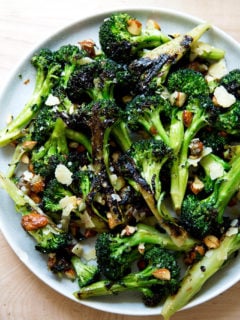
The second Lancaster Farm Fresh CSA box again abounded with beautiful produce: baby lettuces, French breakfast radishes, bok choy, pea tendrils, cremini mushrooms, mustard greens, scallions and, most intriguing, fleur de choy. Fleur de choy, the edible flower of the bok choy plant, can be eaten raw or cooked, or used as a garnish. Chopped and sautéed with garlic and olive oil, the green stalks and yellow flowers brighten any simple pasta dish.
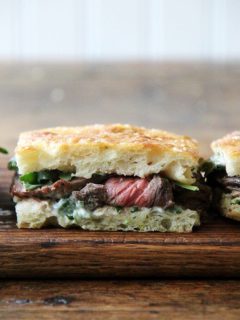
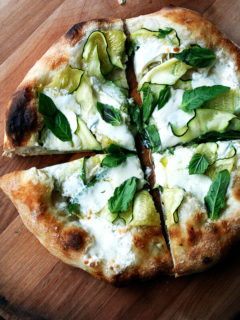
This grilled flatbread, strewn with sautéed cremini mushrooms, scallions and taleggio, and drizzled with truffle oil makes a light summer meal when paired with a simple mixed greens salad.
Grilled Flat Bread with Crimini Mushrooms, Taleggio and Truffle Oil
½ teaspoon instant yeast 1½ cups warm water 4½ cups all-purpose flour 1 teaspoon kosher salt 2 tablespoons olive oil
2 tablespoon olive oil 1 lb. cremini mushrooms, roughly sliced kosher salt and pepper to taste ¼ cup finely chopped shallots 8 sprigs thyme, leaves removed, roughly chopped
olive oil for brushing 4 scallions, trimmed and sliced thinly 4 oz. Taleggio truffle oil to taste
In a large bowl, sprinkle the yeast over the water. Swirl the bowl to dissolve the yeast, then at 2 cups of the flour. Cover the bowl with plastic wrap and let sit 1 hour.
Add the salt and olive oil to the bowl and stir with a wooden spoon until combined. Add the remaining flour to the bowl, stir to form a mass, then turn mixture onto a lightly floured work surface and knead for 5 minutes, or until smooth and satiny, adding flour only as necessary. Place the dough in a large, lightly greased bowl, cover with plastic wrap and let rise in a warm spot until doubled, about 2½ hours. Punch down the dough and divide into 4 balls. Place balls on an oiled sheet tray, grease the tops of the balls lightly, cover with plastic wrap and let rise 35-45 minutes.
Meanwhile, in a large nonstick skillet, heat the oil until almost smoking. Add the mushrooms and leave undisturbed for 2 minutes. After 2 minutes pass, shake pan gently, season with kosher salt and pepper to taste and add the shallots. Let cook for 2 minutes longer, until shallots are lightly golden, then remove from the heat. Sprinkle with the thyme, then transfer to a plate to cool.
Preheat a gas or charcoal grill to medium-high. Clean grill grates and lightly grease with oil. Roll each ball into a 10- to 12-inch circle or rectangle. Brush one side of rolled dough with olive oil and place on grill, oil-side down. Close grill cover and let cook 2 minutes, checking after the first minute. Lightly brush the top side of dough with oil, then, using tongs and a spatula flip the dough.
Top dough with cheese and scallions and close grill cover. Let cook for 2 to 5 minutes longer until dough is cooked through and cheese has melted. Remove flatbread from grill, place on cutting board, drizzle with truffle oil, cut and serve. Repeat with remaining dough.
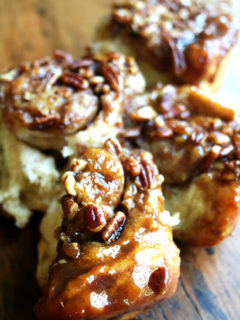
Hot cross buns, associated with Good Friday for centuries, have a storied history. Some trace the spiced sweet rolls back to spring festivals in pagan Britain, when the cross atop the buns represented the four seasons of the year; others believe an Anglican monk in 12th century Britain began adorning his small breads with crosses to honor Good Friday, also known as the Day of the Cross; and another tale describes an English widow who baked cross-topped buns every Good Friday and vowed to have one hanging on her front door until her son, on a journey at sea, returned home. Perhaps the popularity of hot cross buns, however, stems particularly from an old superstition. In 17th century Britain, many believed that if the buns were made on Good Friday itself, the baker, and everyone eating his festive baked goodies, would be protected from misfortune for the rest of the year. This weekend, wake to the smell of freshly baked cinnamon-spiced hot cross buns. Prepare the dough a day in advance and store in the refrigerator overnight, where the buns will slowly rise. Treat your family, friends and yourself to these warm, delectable hot cross buns, and begin celebrating the Easter weekend with this ancient tradition.
Overnight Hot Cross Buns Yield = 16
½ cup milk 1 teaspoon sugar 1 tablespoon instant yeast ½ cup whole wheat flour
1 stick butter, room temperature 1 cup milk 1/3 cup brown sugar 2 eggs, lightly beaten 1 teaspoon cinnamon freshly grated nutmeg to taste 3½ cups all-purpose flour ¼ – ½ cup raisins (optional)
1 egg 2 teaspoons milk
1½ cups confectioners’ sugar 2 tablespoons milk
To make the sponge, place milk in microwave on high for 30 seconds. Add sugar, yeast and flour. Stir and let sit 15 minutes until bubbly. In separate bowl, whisk butter until fluffy and smooth. Add milk, brown sugar, eggs, cinnamon and nutmeg, and whisk until smooth. Add the sponge and stir until smooth. Add flour and stir until stiff dough forms. Turn dough out onto work surface and knead for 4 minutes, adding only enough flour to prevent dough from sticking to surface. At this point, if you wish to add raisins, divide the dough into two equal portions. Flatten one of the portions and sprinkle _ cup raisins over it. Fold dough to enclose the raisins, then knead for 4 more minutes until raisins are evenly dispersed. (Note: If you wish to add raisins to all of the dough, add ½ cup raisins to whole ball — do not divide the dough — and knead for a total of 8 minutes.) Place dough in greased bowl, cover with plastic wrap and let rise for 1 hour or until almost doubled in bulk. Knead remaining portion of dough and place in separate greased bowl also covered with plastic wrap.
Grease two 8-inch square or round baking pans with butter. Punch one of the dough balls down, and turn out onto floured work surface. Roll ball into a 12-inch log. Divide into 8 equal portions and shape each into a ball. Place balls in pan, evenly spaced. Repeat with remaining dough ball. Cover each pan with plastic wrap and place in the refrigerator to rise overnight. Preheat the oven to 350ºF. Remove pans from refrigerator and with a very sharp knife or razor blade, make a cross through each bun. Beat egg with the two teaspoons of milk, brush buns with the mixture, place in the oven and bake for 25-30 minutes. Meanwhile, whisk the confectioners’ sugar with milk to make the glaze. Let buns cool five minutes before drizzling glaze overtop. After the buns are topped with glaze, serve immediately. Note: the glaze is optional — they are delicious spread with softened butter as well.
Celebrate St. Patrick’s Day with a feast featuring three of Ireland’s most renowned products: Guinness, Cashel Blue cheese and McCann oats. While I have been familiar with Guinness and steel cut oats for years — I prepare the oatmeal recipe below almost every morning — I only learned of Cashel Blue these past few weeks while researching Irish cheeses. For the past month at DiBruno Brothers, the cheese mongers have been luring customers to a table showcasing five Irish cheeses: Gubbeen, Durrus, Coolea, Adrahan and Cashel Blue. I happily tested all of them, and although I must admit that I am easily pleased by any variety of a cheese, each was truly delicious. I am partial to blue cheese, however, and the Cashel was my favorite: it melts nicely, and makes a nice snack on crisp toasts, as in the recipe below, but is also wonderful on its own, at room temperature, spread onto soft bread or crackers. Happy St. Patrick’s Day!
Cashel Blue
In the late 18th century the Grubb family, members of an Anabaptist sect, fled to Ireland from England, to avoid persecution. They settled in Tipperary, a town in south-central Ireland, and became millers and buttermakers. A descendant of the family, Louis Grubb, and his wife Jane continued the dairy tradition with their creation of Cashel Blue cheese in 1984. Made from the highest quality milk taken mostly from the cows on their farm, a herd of Friesian dairy cattle, Cashel has received countless honors and awards. Creamy, tangy, salty and sweet, Cashel Blue is truly a treat.
These biscuits take only minutes to make and freeze beautifully. (Place unbaked biscuits on a cookie sheet and place in the freezer for 30 minutes, then transfer to a Ziplock bag. It may be necessary to increase baking time by 2-3 minutes.) Also, for a simple plain buttermilk biscuit, omit the cheese and herbs, increase the salt to ½ teaspoon, and increase the sugar to 2 tablespoons. For a festive treat, however, the Cashel Blue and chives are a wonderful addition.
Buttermilk Biscuits with Cashel Blue Cheese and Chives Yield = 10 biscuits
2 cups all-purpose flour 2¼ teaspoons baking powder ¼ teaspoon baking soda ¼ teaspoon kosher salt 1 tablespoons sugar 8 tablespoons cold unsalted butter 3¼ oz (a scant cup) Cashel Blue cheese ¾ cup + 1 tablespoon buttermilk 3 tablespoons finely chopped chives 2 tablespoons melted butter for brushing
Preheat the oven to 400ºF. In a large bowl, whisk together the flour, baking powder, baking soda, salt and sugar. Cut the butter into the flour and using a pastry cutter or fork, mix the butter and flour until the butter has broken into small bits and flakes. Crumble the blue cheese into the mixture and toss to coat. Whisk the ¾ cup buttermilk with the chives then pour mixture into flour mix. Stir just until the dough comes together to form a mass — Do not over-mix. With lightly floured hands, gently knead the dough in the bowl to bring together, adding the extra tablespoon of buttermilk if necessary, then turn out onto a lightly-floured work surface. Pat the dough into a ¾ – inch thick rectangle. Using a 2½ -inch round cutter, cut the biscuits and transfer to an ungreased baking sheet, spacing the biscuits 2-inches apart. Brush each biscuit with melted butter and transfer sheet to the oven, immediately increasing the temperature to 425ºF. Bake the biscuits for 15 minutes or until golden. Remove from oven, transfer biscuits to wire rack for 2 minutes before serving.
A nice snack: Blue Cheese Toasts Drizzled with Lavender Honey
To make the toasts, cut a baguette into ¼ – inch thick slices, place on a cookie sheet, drizzle with olive oil and bake at 400ºF for 8-10 minutes until golden. Remove from the oven, top with a generous portion of Cashel Blue and return to the oven for 3-5 minutes until melted. Meanwhile, place 1 tablespoon of lavender honey in a shallow bowl and submerge bowl into another bowl filled with hot water to help loosen the honey. When the cheese has melted, remove toasts from the oven, drizzle with honey and enjoy immediately.
Sautéed Cabbage and Radicchio with Bacon and Cashel Blue Cheese Serves 4 as a side dish
1½ oz bacon, cut into ½-inch pieces 1 small head cabbage, halved, cored and thinly sliced kosher salt and pepper to taste 1 small head radicchio, halved, cored and thinly sliced 3 tablespoons balsamic vinegar 1 teaspoon sugar 2 oz Cashel Blue cheese
Place the diced bacon in a large nonstick skillet, cover, and cook over low heat for five minutes. Remove the cover, stir and raise the heat to medium-high. Cook for another five minutes or until the bits of bacon are beginning to crisp and brown. Remove bacon with a slotted spoon and transfer to a plate. Add the cabbage, and season with salt and pepper to taste. Cook for about five minutes or until the cabbage is slightly tender. Taste to test its texture, and cook a few minutes longer if necessary. Add the radicchio, and using tongs, mix it with the cabbage. Add the balsamic and sugar and cook until the vinegar has reduced and the radicchio has wilted, about 2 minutes longer. Remove from the heat, stir in the reserved bacon bits and serve. Sprinkle the Cashel Blue evenly on individual servings.
Guinness Draught
In 1759, shortly after signing a 9,000-year lease at £35 a year, Arthur Guinness began brewing ales from St. James’s Gate Brewery in Dublin, Ireland, a site that has since become Dublin’s most popular tourist attraction. Today, Guinness is Ireland’s best selling alcoholic drink and is one of the most successful beer brands in the world. A dry stout, based on the porter style that originated in London in the early 1700s, Guinness is recognized by its thick, creamy, tan-colored head and its distinct roasted-barley flavor. A versatile beverage, Guinness complements both sweet and savory dishes as illustrated by these two recipes for Chocolate Guinness cake and Guinness-braised short ribs.
Guinness-Braised Short Ribs Serves 4
3 lb short ribs (long cut), cut into 2-inch pieces kosher salt and freshly ground black pepper 2 tablespoon olive oil 1 leek, stem removed 1 medium onion, peeled 2 medium carrots, peeled 1 cinnamon stick 1 tablespoon tomato paste 2 11-oz bottles of Guinness 2 cups chicken stock, preferable homemade zest of one orange zest of one lemon 4-5 sprigs of thyme 1 bay leaf
Preheat the oven to 300ºF. Place a large oven-safe soup pot or Dutch oven over high heat. Season short ribs generously with salt and pepper. Add 1 tablespoon of the oil to pot, let heat for a few seconds until almost smoking, then add the meat skin side down. Let brown for about five minutes, flip, and brown other side for another five minutes. Meanwhile, cut the leek into big chunks and soak in a bowl of cold water, separating the layers to make sure each is well cleaned. Roughly chop the onion and the carrot into medium-large pieces. This should yield about 3 cups leeks, and 2 cups each of carrots and onions.
When the ribs have finished browning, remove from pan and place on a plate. Drain off all fat and discard. Heat remaining tablespoon of olive oil over high heat and add the vegetables and cinnamon stick. Season with salt and pepper to taste and let cook undisturbed for 2 minutes, then stir. Let vegetables sauté for 8-10 minutes. Add the tablespoon of tomato paste and stirring to coat the vegetables. Deglaze the pan with the Guinness and the chicken stock, scraping browned bits from bottom of pan. Add the zests, thyme sprigs, bay leaf and short ribs, and bring pot to a boil. Reduce the heat so that the liquid is just simmering, cover and place in the oven. Braise for 2 hours. Remove pan from oven and test one of the short ribs. If the meat is very tender and nearly falling off the bone, the ribs are done. If not, return the pot to the oven, testing every 15 minutes until done. Remove the ribs from the liquid to a bowl or plate. Strain the braising liquid, discarding the solids. Pour liquid into tall narrow vessel and let chill in refrigerator for at least 10 minutes. Skim fat from surface and discard. Return ribs to pan, cover with liquid and bring back to a simmer. Serve immediately. Note: Can be made three days in advance.
Chocolate Guinness Cake Adapted from Nigella Lawson’s “Feast” Hyperion (2004)
1 cup Guinness 1 stick + 2 T. butter ¾ cup unsweetened cocoa powder 2 cups sugar ¾ cup sour cream 2 eggs 1 T. vanilla extract 2 cups all-purpose flour 2½ teaspoons baking soda 1 teaspoon kosher salt
8 oz cream cheese, softened 1¼ cups confectioners’ sugar ½ cup heavy cream
Preheat the oven to 350ºF. Butter a 9-inch springform pan. In a medium saucepan, heat Guinness with butter until butter is melted. Remove from heat and whisk in cocoa powder and sugar. Whisk sour cream with the eggs and vanilla, then pour into Guinness mixture and stir until smooth. Whisk together flour, baking soda and salt, then add to batter, stirring just until combined. Pour into prepared pan, and bake for 45 minutes. Test cake with a toothpick or paring knife. If utensil comes out cleanly, remove cake from oven. Let cool completely in pan. Beat cream cheese until light. Add sugar. Add cream and beat until thick. If cream cheese mix is too soft to spread onto cake, let chill for 10 minutes or until firm Spread cooled cake with cream cheese frosting.
John McCann’s Steel Cut Oats
Ireland’s fertile plains, humid climate and clean rivers have enabled it to grow high-quality oats since the fifth century. In 1800, John McCann built a mill on the east coast of Ireland in the town of Beamond, and began making steel cut oats. Several years later, in 1851, his product received two quality of excellence awards from exhibitions in London and Dublin, followed by first prize at the Philadelphia Exhibition in 1876 — an honor still proudly printed on its old-fashioned tin can. Steel cut oats are whole grain groats that have been cut into small pieces. They are an excellent source of complex carbohydrates and protein, containing twice as much protein as brown rice, and 50 percent more than bulgur. Moreover, steel cut oats are nuttier and chewier than rolled oats, and create a creamier, more flavorful oatmeal. Low in fat and a great source of cholesterol-lowering soluble fiber, steel cut oats make a delicious and nutritious breakfast.
Steel Cut Oatmeal with Medjool Date and Cinnamon Serves 1
¼ cup skim milk ¾ cups water pinch of kosher salt ¼ teaspoon cinnamon ¼ cup steel cut oats 1 Medjool date 1 banana granola for crunch (optional)
In a medium saucepan, bring milk, water, salt and cinnamon to a boil. Reduce heat to low, add oats and stir. Gently simmer, stirring every five minutes for about 21-23 minutes. Watch closely at the end — add a splash of water or milk if oatmeal sticks to bottom of pan. While oatmeal cooks, finely dice the date and slice the banana. Place fruit in a bowl, top with the cooked oatmeal and stir to combine. The date and the banana should sweeten the oatmeal sufficiently, but add a touch of sugar, brown sugar or honey if necessary. Top with granola if desired.
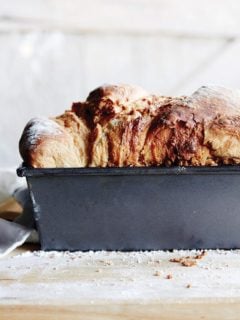
At Django, a little BYO on 4th Street just north of South, the chef bakes his bread in a flowerpot. The warm pot arrives to the table along with softened butter served in an old-fashioned butter crock. Three years ago I enjoyed my first bite of this unique bread and have been meaning to test the baking method ever since. It could not be easier. Both yeast breads and quick breads bake equally well in the terra cotta vessel, but for simplicity I’ve provided a recipe for a no-knead beer bread. The dough takes no more than five minutes to mix and makes a fun presentation. Celebrate this last weekend of the Philadelphia Flower Show with a pot of this delicious bread. Enjoy!
Flowerpot Beer Bread Yield = 1 standard 4” pot
1½ cups all-purpose flour ½ teaspoon baking soda ¼ teaspoon baking powder ½ teaspoon kosher salt 1½ teaspoons sugar ½ beer or (¾ cup beer) I like Magic Hat #9 1 standard 4” diameter flowerpot (lead-free) 2 tablespoons butter
Preheat the oven to 425ºF. Crumple a small piece of aluminum foil and stuff the tiny hole at the bottom of the pot. Generously coat inside of flowerpot with nonstick cooking spray. Whisk together flour, baking soda, baking powder, salt and sugar. Add beer, stir until combined and place in prepared pot. Bake for 10 minutes, then reduce heat to 375ºF and bake for 30-35 minutes longer, or until golden brown on top. Remove from the oven and let sit for five minutes before attempting to remove from pot. Meanwhile, melt butter. After the five minutes, the bread should slide out easily from the pot. Turn out onto cooling rack and let rest five more minutes. Place loaf on a cutting board, turn upside down, and slice loaf in half vertically through the center. Holding the two halves together, make another vertical slice through the center, perpendicular to the previous slice to create 4 quarters. Return sliced bread to pot, pour hot melted butter over bread (careful, this makes a mess) and serve immediately with more softened butter. Enjoy!
I normally cannot resist a sandwich pressed on soft, airy focaccia or wholesome, seeded multigrain bread, but every so often a fresh, crusty ciabatta roll is a nice change. In Italian, ciabatta means ‘slipper,’ which its elongated, flat, rectangular shape vaguely resembles. Ciabatta has a crisp crust, a soft porous interior and is light to the touch. The thin crusty exterior forms an ideal base to house heartier fillings such as roast beef, ham or grilled chicken breasts; and its soft interior absorbs spreads and sauces, without getting soggy—ciabatta holds up nicely under pulled pork, chicken parmesan and even hamburgers. This past Monday I made these slipper-shaped rolls for a honey-roasted ham, Gruyère cheese, Bosc pear and grainy mustard sandwich served at an office luncheon. It was a nice combination and because the bread was fresh, no toasting or pressing was necessary. Toasting, however, will fortify the exterior and ensure an especially solid base for a wetter filling such as pulled pork. Making ciabatta does require a starter, so a little planning is necessary. Slice and freeze any extra rolls—this recipe makes 6 4.5-oz sandwich rolls—and defrost and enjoy as needed.
Ciabatta Yield 6 4.5-oz Rolls
Starter: 1/2 cup (4 oz) water a scant cup (4 oz) bread flour
8 oz starter (see recipe below) 3/4 cup + 1 T. (6.5 oz) water a scant 3 cups (13 oz) bread flour 1 Tablespoon honey 1/2 tsp. instant yeast 1 teaspoon table salt cornmeal for dusting
To make the starter, combine the water and flour in a small bowl. Let bubble slightly, stir and let sit at room temperature overnight.
To make the bread, combine the starter, water, bread flour, honey and yeast in the bowl of a stand mixer fitted with the dough hook. Mix at low speed for 1-2 minutes until combined. Add the salt and increase the speed to medium-low and mix for 6-7 minutes longer adding a little flour if necessary. (If the dough isn’t wrapping around the hook or leaving the sides of the bowl at all, add flour. Be careful not to add too much additional flour, however, because the dough should be slightly sticky and moist.) Transfer dough to a slightly oiled bowl, roll around to coat, cover bowl with plastic wrap and let rise until doubled in bulk, about 1½ – 2 hours. When dough has doubled, punch down and turn out onto a lightly floured work surface. Portion the dough into 4.5-oz balls, or divide the dough into approximately 6 equal portions. Gently knead and roll each portion into a ball, and let sit on the work surface covered with plastic wrap for 30 minutes. After the 30 minutes, grab each side of one ball with each hand and gently pull outward to stretch into a rectangle. Repeat with remaining balls. Let rest covered with plastic wrap for another 30 minutes. Preheat the oven to 450° F. Line 2 sheet trays with parchment paper or Silpats. (I used one regular sized sheet pan and one slightly smaller pan. I still wasn’t able to fit the pans side by side on one rack, so I baked them on separate racks and rotated them after 10 minutes of baking.) Lightly dust pans with cornmeal. After the 30 minutes, grab the sides of the rectangular shaped-dough forms, gently pull outward again and transfer to the prepared sheets. Let the dough rest again until the oven has preheated, about another 30 minutes.
When the rolls have slightly puffed again, bake until golden brown, about 10 minutes. Rotate the pans and bake for 3-5 minutes longer until nicely golden. Remove from the oven and transfer to a cooling rack immediately. Let cool completely before using.
My inspiration to make these rolls again stems from a recent restaurant experience. The other night, my husband and I met two friends for dinner for a late dinner at Meritage (20th and Lombard). We sat at the bar, ordered a bottle of wine and spent the first hour chatting. By the time we placed our order, we were all famished–a condition wholly magnified by the wine. Needless to say, the timing could not have been more perfect for the delivery of the piping hot seeded and salted rolls to each of our bread plates. Although the bartender warned us that the rolls had just emerged from the oven, none of us could refrain from tucking in. Sometimes nothing satisfies like warm bread and butter. These rosemary-olive pull-apart rolls similarly release steam as they are separated and are delicious when served immediately with softened butter.
Rosemary-Olive Dinner Rolls Yield=9 (2-oz) Rolls
Starter: 1/4 cup (2.5 oz) water a heaping 1/2 cup (2.5 oz) whole wheat flour
Rolls: 1/4 cup (2.5 oz) starter 1/2 cup (5 oz) water 1 and 7/8 cup (8.5 oz) bread flour 1/2 tsp. instant yeast 1/2 tsp. table salt 1/4 cup (2 oz) chopped, pitted Kalamata Olives 1 tablespoon finely chopped rosemary
To make the starter, stir together the flour and water. Let stand at room temperature until bubbles slightly, stir to combine, then cover with plastic wrap and let stand at room temperature overnight.
The next day, place 1/4 cup or 2.5 oz of the starter into the bowl of a stand mixer. (See note below for what to do with remaining starter.) Add the water, bread flour and yeast. Mix on low speed for one minute until the mixture has come together slightly. With the mixer running add the salt, increase the speed to medium-low and mix for five minutes. The dough should be balled up around the hook. If it is not, add more flour a little bit at a time until the dough is wrapped around the hook. After five minutes, return the speed to low, add the rosemary and olives and mix for 1-2 minutes until olives are slightly incorporated. Stop machine, scrape down dough, and turn out onto lightly floured work surface. Knead for 2-3 minutes until the rosemary and olives are evenly incorporated. Dust some more flour onto the board, cover dough with clean kitchen towel and let rest for 90 minutes at room temperature or until almost doubled in size.
After the 90 minutes, start dividing the dough. I portion each roll into 2-oz pieces, but if you don’t have a scale, roughly divide the dough into 9 equal pieces. Line a sheet pan with parchment paper or a Silpat. Ball each piece of dough into a nicely shaped roll and place on prepared sheet. Place the rolls next to each other–just barely touching–so that when they rise, they rise into each other. Lightly spray the tops with cooking oil or with water, cover loosely with plastic wrap and place in a warm area to rise again, until nearly doubled in size. Depending on how warm the area is, this may take between 30-50 minutes. Preheat the oven to 475 degrees F.
When the rolls have puffed nicely, gently remove the plastic wrap and place in preheated oven. Bake for approximately 15 minutes. If rolls sound hollow when gently tapped, remove them from the oven. Otherwise, return to oven to bake for 3-5 minutes longer, check again, and remove when ready. Bring to the table, gently pull apart (be careful of the hot steam), and serve immediately with softened butter. Enjoy!
Note: You may have extra starter. Place remaining starter in a Tupperware container, add one cup of water, and one cup of whole wheat flour, stir, let sit until bubbles, stir again, then store in refrigerator until ready to use for another recipe. It will keep forever. I always have a white and a whole wheat starter in my refrigerator, and I “feed” them with equal parts flour and water each time I take from them.
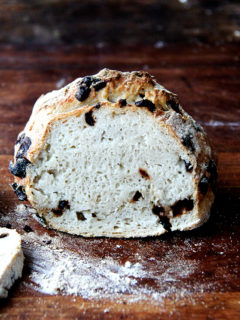
On Wednesday November 8, in his New York Times column, “The Minimalist,” Mark Bittman enthusiastically describes a no-knead bread making process. I’ve discovered that his enthusiasm was not unwarranted. Since reading the article, I’ve made the bread twice, and both times have been very pleased with the results. A rustic boule emerges from the oven truly appearing as though it had been produced in a professional bakery. The crust is thin and crisp and the interior moist and airy. It is dramatic and beautiful and comfortably feeds ten people for dinner. The next day, it makes delicious toast and sandwich bread, and moreover freezes beautifully.
Note: I’ve adjusted the recipe by adding a touch more salt than suggested in the article, and adding a half a teaspoon of sugar, which I think has improved the bread’s flavor. Be sure to read the recipe through entirely before endeavoring to make this bread: you need 12-18 hours initially in rising time and 2 more hours subsequently for a second rise.
No-Knead Bread Adapted from “The Minimalist,” The New York Times: Dining In November 8, 2006
3 cups bread flour, plus more for dusting ¼ tsp. instant yeast 1¾ tsp. table salt ½ tsp. sugar Cornmeal, wheat bran or oat bran as needed
In a large bowl, combine flour, yeast, salt and sugar. Add 1 and 5/8 cups water, and stir until blended. Dough will be sticky. Cover bowl with plastic wrap and let rest 12-18 hours at room temperature.
After the 12 hours, or when the surface of the dough is dotted with bubbles, lightly flour a work surface and place dough on it. Sprinkle a little more flour on the dough and fold it over on itself once or twice. Cover loosely with plastic wrap and let rest about 15 minutes.
Meanwhile, lay a clean kitchen towel (not terry cloth) on a counter or tabletop in a draft-free area. Generously coat it with cornmeal, wheat bran, oat bran or any combination of the three. After the 15 minutes, using as much flour as necessary to keep dough from sticking to your fingers and the work surface, quickly shape the dough into a ball and place seam side down in the center of the prepared towel. Dust with more cornmeal, wheat bran or oat bran. If the towel is large enough, fold the sides up over the bread so that it is completely covered. If the towel is too small, cover with another towel. Let rise for another 2 hours.
Forty-five minutes before the dough is ready, preheat the oven to 450°F. Place a 6- to 8-quart heavy covered pot (cast iron, enamel, Pyrex or ceramic: I’ve used a ceramic Emile Henry Dutch oven and a circular Pyrex baking dish) on a rimmed sheet pan and place in the oven while it heats. When dough is ready, carefully remove pan and pot from oven. Slide your hand under towel and turn dough over into pot, seam side up. This is tricky. The first time I made this I clumsily flopped the dough into the pot and it lay seam side down. If this happens, just leave it: there is no way to fix it without burning yourself, and it ultimately does not matter. So, try your best to let the dough fall seam side up, and don’t worry and if it lands seam side down. Cover with lid and bake 30 minutes. Remove lid and bake another 15-30 minutes or until it sounds hollow when tapped. Remove from oven, and turn out onto a cooling rack. This makes a mess. Placing the cooling rack inside another rimmed sheet pan helps catch the crumbs that fall out of the baking vessel.