Bread

Breakfast Pizza For Dinner

Oh, how I wish I could take credit for this ingenious creation. Alas, I cannot. A very good friend of mine, after observing my egg obsession, kindly directed me to this Apartment Therapy site, offering me yet another way to enjoy my beloved eggs. (Thanks, Amanda!) The eggs, cracked atop the pizza during the last few minutes of baking, retain a runny yolk, which, when cracked, ooze into the crust and toppings — sautéed Swiss chard and cheese, in this case — making each bite unbelievably tasty. This combination was particularly yummy, but I suspect these eggs would enhance various topping combinations, from sausage and peppers to tomato and basil to ricotta and spinach — oh, the possibilities are endless.

Not too long ago, I made a flatbread with brie, prosciutto and watercress — a recipe I spotted in a recently published cookbook Blue Eggs, Yellow Tomatoes. Well, I must confess that the dough recipe I have enclosed below is far superior. Adapted from Todd English’s The Figs Table, this wet dough — admittedly a little difficult to work with — yields a thin and crispy crust. I’m not sure why I bother experimenting with any other recipe — my family (my mother) has been making the Figs’ pizza dough for years with great success.

One note: Unless you have a very powerful food processor, don’t use one. I burned out the engine on mine making this recipe and had to finish the kneading by hand. Use a stand mixer if you have one or knead by hand from the beginning.

This recipe makes a very wet pizza dough. Once baked, however, the dough becomes a light, thin, crisp crust. My family has been using this recipe for years, and one of our favorite topping combinations includes caramelized onions, grapes, blue cheese, Parmigiano Reggiano and fresh basil. This dough freezes well, too: After the two-hour rise, punch it down, wrap it in plastic and throw in the freezer. When ready to use it, let the dough sit at room temperature for a few hours prior to cooking.

Pizza Dough
Adapted from Todd English’s The Figs Table
Makes 4 8- to 10-inch pizzas (Serves 1 to 2 people per pizza)

¼ cup whole wheat flour
3½ cups all-purpose flour, plus additional for rolling
2 teaspoons kosher salt
1 2/3 cups lukewarm water
2 teaspoons sugar
2 teaspoons active-dry yeast
2 teaspoons olive oil

1. Place the flours and salt in a mixer fitted with a dough hook. Combine the water, sugar and yeast in a small bowl and let sit for five minutes until the mixture bubbles slightly. Add the olive oil and stir. With the mixer on low, gradually add the oil-water mixture into the bowl. Knead until the dough is firm and smooth, about 10 minutes. The dough will be very wet and sort of difficult to work with. I liberally coat my hands with flour before attempting to remove it.

2. Divide the dough into four balls, about 7½ ounces each. Line two cookie sheets with parchment paper. (Be sure to oil the parchment paper.) Place two balls on a sheet. Lightly rub the balls with olive oil or lightly coat with cooking spray, then cover loosely with plastic wrap. The dough is very sticky and wet, so, be sure to coat the balls or the plastic with oil. Let the balls rise in a warm spot until they have doubled in bulk, about two hours.

3. To roll out the dough: Dab your fingers in flour and then place one ball on a generously floured work surface. Press down in the center with the tips of your fingers, spreading the dough with your hand. When the dough has doubled in width, use a floured rolling pin and roll out until it is very thin, like flatbread. The outer portion should be a little thicker than the inner portion.

Breakfast Pizza: Sorry for these undetailed instructions, but I really just threw this together.
Serves 2

cornmeal

olive oil
Swiss chard, washed, stems diced, leaves roughly chopped
garlic, minced
kosher salt
crushed red pepper flakes
Grated Parmigiano Reggiano and cheddar and crumbled goat cheese (use any grated cheese you have on hand)
4 eggs

1. Preheat the oven to 500ºF. Follow the instructions above for rolling out the dough. Sprinkle some cornmeal on a baking sheet and transfer the dough to the baking sheet.

2. Meanwhile, sauté the Swiss chard stems in the oil until slightly tender. Increase the heat to high, add the greens, season with salt, red pepper flakes and garlic. Rearrange the greens with tongs until nicely wilted. Turn off the heat and set aside.

3. Top pizza with a thin layer of greens and cover with the grated cheese. Place in the oven for about eight minutes, or until about three minutes away from being done. Remove from the oven and crack the eggs over the pizza. Return to the oven, cooking just until the whites are set and the yolks are slightly runny.

4. Serve immediately.

Backyard Chickens & Thin-Crust Pizza

A few months ago, I mentioned I was looking forward to the day when Ben and I have room in our place to fit a freestanding freezer, (one large enough to fit a half or quarter steer.) Well, I’ve added something else I’m looking forward to getting as soon as space permits: chickens. I can’t believe I never thought about this before. And, as far as I can tell from this new cookbook I’ve been reading, chickens don’t seem like that much work. I guess I’ll find out.

So, this cookbook is called Blue Eggs & Yellow Tomatoes. I’ve now tried several recipes from it including penne with asparagus, meyer lemon scones, and thin-crust pizza with brie, prosciutto and watercress. The penne was good, but way too cheesy — the recipe called for 15 ounces of ricotta and a half cup of parmesan cheese for one pound of pasta. The scones were good, too, but not as good as almond-buttermilk scones. The pizza, pictured above, however, was delectable. The dough recipe yields three eight-ounce balls and freezes well. Tonight, I thawed one of the balls at room temperature for three hours, as instructed, rolled it out and baked it topped with sautéed Swiss chard, Parmigianno Reggiano and smoked Gouda. I actually preferred this pizza to the one with brie and prosciutto. Call me crazy, but as I was eating the one topped with watercress, I kept thinking it needed something else, maybe a poached or fried egg on top.

Anyway, despite a few so-so recipes, I am still very happy to have stumbled across this book. Why? It inspired me to plant a garden. The author, Jeanne Kelley, an L.A. resident briefly describes a way of gardening — in raised beds made from plywood — that she says vegetables grow best in. I had just read an article in Acres U.S.A about a woman in Colorado doing the same sort of thing but with cinder blocks instead. I went to the Web site, The Living Farm, noted in the article  and downloaded the author’s E-book called Cinder Block Gardens. It cost $19.95. Over the weekend, I went to Lowe’s and Plant Depot and purchased everything I needed for my garden. I still need to figure out what I want to grow, but the blocks have been laid, the soil mixed and the ground watered. I cannot wait to start planting.

Once I get some seedlings in the ground, I’ll post some pics. Seriously, if you have any desire to start a vegetable garden, check out this E-Book. You don’t need a perfect patch of land — we built ours on a slightly sloped, rock-hard area measuring about seven feet by four. The author, Lynn Gillespie, has painstakingly detailed the process — the book is worth every penny.

And, once I have the space, 10 or 20 years from now, I will consult the final chapter of Blue Eggs and Yellow Tomatoes, which describes in detail how to raise backyard hens.

I think one reason why I preferred the Swiss chard pizza to the prosciutto is that I didn’t have enough Brie to cover the surface and make it really tasty. This emerged from the oven looking a little freaky.

Brie and Prosciutto Pizza with Watercress
Adapted From Blue Eggs & Yellow Tomatoes (Running Press, 2008)
Yield = One 12-inch pizza

8 oz. Pizza Dough (recipe below)
8 oz. double-cream Brie (any type of Brie works fine, too)
Cornmeal
3 to 4 thin slices prosciutto
2 cups watercress or arugula leaves
1 tablespoon fresh lemon juice
2 teaspoons extra-virgin olive oil
1 garlic clove, pressed
pepper

1. Prepare the pizza dough as directed in the recipe.

2. Place the Brie in the freezer until it is firm but not solid, about 15 minutes. Trim off the rind and cut the Brie into ¼-inch-thick slices. Arrange the slices on a waxed-paper-lined pan and refrigerate. (I didn’t do this. I think if you use the really good stuff, this step might be necessary, but for regular Brie, leaving it at room temperature should be fine.)

3. Position one rack in the bottom third of the oven and preheat it to 400ºF. Sprinkle a large, heavy baking sheet baking sheet lightly with cornmeal (about one tablespoon).

4. Roll the pizza dough out on a lightly floured surface to a 12-inch round. Transfer the dough to a prepared sheet. Distribute the Brie evenly on top of the dough. Bake the pizza until the Brie melts and the crust is golden brown on the bottom, about 15 minutes. Transfer the pizza to a cutting board. Distribute the prosciutto evenly on top of the pizza.

5. Toss the watercress with the lemon juice, olive oil, and garlic in a medium-sized bowl. Top the pizza with the watercress and season with pepper. Cut into wedges and serve.

Pizza Dough
Adapted From Blue Eggs & Yellow Tomatoes (Running Press, 2008)
Yield = Three 8-oz. Balls Pizza Dough

1 cup lukewarm water
1½ teaspoons active dry yeast
2¼ cups unbleached all-purpose flour
½ cup white whole wheat flour (regular whole wheat flour works fine, too)
3 tablespoons vital wheat gluten
1½ teaspoons kosher salt
¼ cup extra-virgin olive oil

1. Whisk the water and yeast together in a two-cup measuring cup and let stand for 5 minutes.

2. Combine the flours and salt in a food processor and pulse to blend. Whisk the olive oil into the yeast mixture. With the food processor running, pour the yeast mixture through the feed tube and process until the dough forms a ball, about 1 minute. (If the dough does not form a ball, add lukewarm water by the teaspoons until the dough comes together.)

3. Knead the dough briefly on a lightly floured surface for about one minute. Brush a large bowl with olive oil. Transfer the dough to a bowl and turn the dough to coat it with oil. Cover the bowl with a clean towel and let the dough stand until it doubles in volume, about 1½ hours.

4. Punch the dough down. Divide the dough into three even balls, about eight-ounces each. (Refrigerate up to two days or freeze for one month. Let refrigerated dough stand for one hour and frozen dough thaw four hours at room temperature before rolling.)

Same dough as pictured above, but topped with sautéed Swiss chard, Parmigiano Reggiano and smoked Gouda:

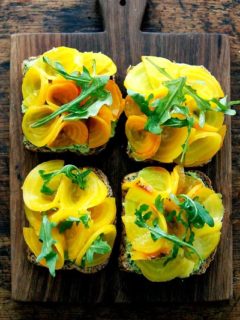
Poached Eggs Over Flax Bread

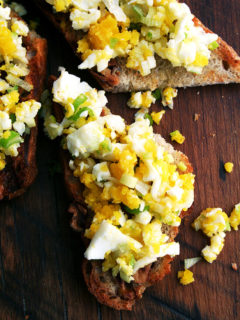
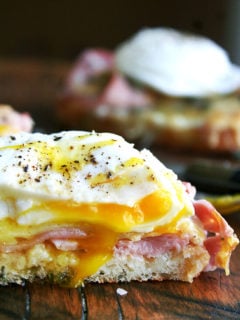
So, as you know, I’ve been eating a lot of eggs. I’ve been cooking them in various ways — scrambled, poached, and even baked into tortilla shells (thanks for the recipe, Ann … next Friday I’ll post my results) — and I’m starting to notice a pattern: Eggs need to be coddled. Pardon the pun, but what I mean is that eggs, prepared in any way, need to be cooked gently — slowly over low heat. And, as I mentioned recently, if you start with really fresh eggs all you need is salt, pepper and a splash of Tabasco.

Now, I haven’t tested my theory on fried eggs, but I will, and I’m guessing this method won’t fail me.

As for the bread you see pictured, I’m still in disbelief that it emerged from the oven looking somewhat like a loaf of bread. Let me explain. I had been reading this book about omega-3 fatty acids and became inspired to make flax-seed bread. I found a recipe on the Internet, but the quantities were given in gram form. Not to worry, I converted the grams to ounces, and then from ounces to cups. ( My digital Salter scale is still in storage.)

I mixed together all the ingredients, kneaded the dough briefly — the recipe told me to do so — and placed the ball in a bowl. Twenty-four hours later, the dough had not budged. I couldn’t bear the thought of throwing it away, however, so I dissolved another packet of yeast in some water, let it bloom and then mixed it with some white flour. I broke the flax-seed rock into my new flour-water-yeast mixture and began kneading. After 10 minutes, I placed the dough in a bowl to rise, I hoped, once again.

Twenty-four hours later, the dough had made a little bit of progress, so I threw it in the oven before it could collapse on me. The results, well, let’s just say, were better than I had expected? Made mostly with whole wheat flour and loaded with flax seeds, this bread tastes a little nutty and very wholesome.

Yesterday afternoon, while we celebrated my uncle Jerry’s birthday, Aunt Vicki sliced up some of this bread, toasted it up and served it with butter and orange marmalade. It actually made a nice little snack. And cousin Jay, after slicing the bread very thinly, made a tasty looking avocado and turkey sandwich. The flax bread, although having the effect of feeling “like a steel glove in the stomach,” as uncle Jerry noted, was a hit.

Perfect Poached Eggs

vinegar
eggs, however many you want
kosher salt
freshly ground black pepper

1. Bring a small, shallow saucepan filled with water to a boil. Add a capful of vinegar. Crack eggs, one at a time, into a ramekin or small vessel. Reduce the heat of the pot to just a simmer — seriously, the water should hardly be moving. Using the end of a wooden spoon, swirl the water to create a mini whirlpool. Gently drop the egg into the center of this whirlpool.  Turn up the heat to maintain that very gentle simmer, then add another egg in the same manner to the pan.

2. To test for doneness, remove one of the eggs with a slotted spoon. Gently press the yolk with your finger. If it feels too soft, return egg to water. Cook for a total of about 3 minutes or less. Remove with a slotted spoon and gently dab the top with a paper towel — I lay a paper towel over the egg briefly to absorb the excess water. Serve the eggs over toast. Season with salt, pepper and Tabasco, if desired.

Garlic-Cheese Butter & A San Clemente Sunset

I’m becoming a real purist. I have now renounced fake butter, a big deal in the Stafford household. I mean Ben and I practically fell in love over a tub of Brummel and Brown. Not really, but for many years, this butter-like spread, made with yogurt, was a staple in our refrigerator. Toast at breakfast and warm bread at dinner always received a dab of Brummel and Brown, its unfailing room-temperature texture convenient and its health claims welcome.

So what has inspired the sudden shift? I know, I know. I mention Michael Pollan in every other entry. His latest book, however, has really influenced how I shop and what I eat. And for the better. Butter is really good.

Until today, never had I read the ingredient list printed on a tub of Brummel and Brown. Here it is: water, vegetable oil blend (liquid soybean oil, partially hydrogenated soybean oil), nonfat yogurt (cultured nonfat milk), salt, gelatin, vegetable mono and diglycerides, soy lecithin, (potassium sorbate, calcium disodium edta) used to protect quality, lactic acid, artificial flavor, vitamin a (palmitate), beta carotene (for color).

Now, let’s review a few of Pollan’s eating algorithms as outlined in In Defense Of Food:

1. Don’t eat anything your great grandmother wouldn’t recognize as food.
2. Don’t eat anything incapable of rotting.
3. Avoid food products containing ingredients that are A.) unfamiliar, B.) unpronounceable, C.) more than five in number, or that include D.) high-fructose corn syrup.

Brummel and Brown fails on every account except 3-D. Now, the tablespoon of Brummel and Brown I spread on my toast every other day likely wasn’t going to kill me. And maybe none of these ingredients is actually that bad for me. But do we really know? A tablespoon of butter on my toast surely won’t kill me — we’ve been eating butter for over 4,000 years (according to a quick google search). So why should I eat partially hydrogenated soybean oil (a trans fat*) and soy lethicin when I can eat cream? I prefer to eat cream, the sole ingredient in a batch of unsalted butter.

Because I have failed to write up an extensive entry on In Defense Of Food, I have enclosed a link to my notes, if anyone cares to learn more about the book.

*Brummel and Brown explicitly states on its tub “No Trans Fats,” but an asterisk leads to a qualification based on FDA labeling regulations related to fats: Less than one gram of fat is declared 0 grams per serving.

So, on Sunday at the San Clemente farmers’ market, when Jordan Stone of Delaney’s Culinary Fresh asked me if I was “anti-butter” I shook my head “no” and began sampling. My favorites included sun-dried tomato asiago, basil parmesan, and garlic asiago, a tub of which I ended up taking home. Spread onto warm bread, this butter, flavored with roasted garlic, Asiago cheese, herbs, lemon and sea salt, makes the Stafford household very happy.

Contrary to how it may appear, I am not a sales rep for Delaney’s Culinary Fresh. Just a huge fan. I’ve now used several other products including the artichoke tapenade (as an hors d’oeuvres with a baguette), the sun-dried tomato marinara sauce, and the basil Asiago sauce (for an instant dinner with garlic-basil spaghetti). Yum!

This is the sunset Ben and I enjoy every evening from our apartment. Just kidding. It’s the view from The Beachcomber, a great motel in San Clemente. Each room has a mini kitchen. Come visit!

Best Buttermilk Biscuits

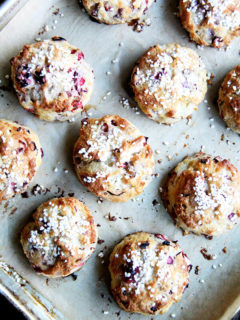
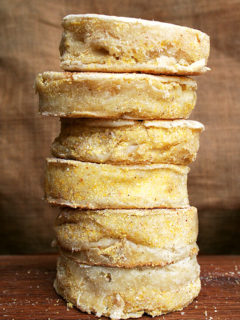
Several years ago, The Washington Post ran an article in their food section called “Building a Better Biscuit,” which my grandmother saved for me, and which I have referred to many times since. The article gives some good suggestions: Don’t overwork the dough; to get maximum rise, bake the biscuits soon after they are cut; and use buttermilk, fine sea salt, and a combination of baking powder and baking soda. Light, flaky and buttery, these biscuits are delectable!

The original recipe called for eight tablespoons of shortening, but I, conditioned by my mother, use all butter instead. This recipe can be adapted — I made a cashel blue cheese and chive variation for St. Patrick’s Day — and the dough, unbaked, can be frozen and baked straight from the freezer. I prefer to eat these just as they are, maybe with a little butter, but they also make a nice base for poached eggs, Ben’s favorite way of eating them.

Buttermilk Biscuits
Yield = 8 biscuits

2 cups all-purpose flour
2¼ teaspoons baking powder
¼ teaspoon baking soda
¼ teaspoon fine sea salt
2 tablespoons sugar
8 tablespoons cold unsalted butter
¾ cup buttermilk plus more for brushing

Preheat the oven to 400ºF.
In a large bowl, whisk together the flour, baking powder, baking soda, salt and sugar. Cut the butter into the flour mixture and using a fork, mix the butter and flour until the butter has broken into small bits and flakes.
Pour buttermilk into flour mix. Stir with fork just until the dough comes together to form a mass — Do not over-mix. Gently gather the dough in the bowl to bring together, adding an extra tablespoon of buttermilk if necessary. Turn out onto a lightly floured work surface. Pat the dough into a ¾-inch thick circle. Using a two-inch round cutter, cut the dough into eight biscuits. Transfer to an ungreased or parchment-lined baking sheet, spacing the biscuits 2-inches apart.
Brush each biscuit lightly with buttermilk. Sprinkle a pinch of sugar over the top of each. Transfer sheet to the oven, immediately increasing the temperature to 425ºF. Bake the biscuits for 15 to 20 minutes or until golden. Remove from the oven, transfer to a wire rack to cool or serve immediately.

Pumpkin Dinner Rolls

With Christmas less than a month away, only a few weeks remain to experiment more with pumpkin. Pumpkin ice cream is high on my list; pumpkin tiramisu, however, is falling quickly. It may not, unfortunately, happen this season.

And thanks to a free sample offered at Williams-Sonoma yesterday, I think I’ll be making a batch of pumpkin dessert bars very soon. I’m usually not a sucker for those jarred products (butternut squash purée, for example, or roasted garlic tomato sauce) but the bar I sampled, made with a jar of their featured pumpkin butter (Muirhead), was particularly good, and the jars, at half price, became very attractive. The sales woman advised I buy two because no more would arrive this season. So, I did.

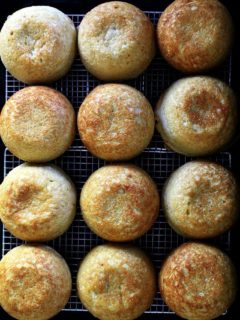
These dinner rolls, made simply with a can of Libby’s pumpkin purée, actually have nothing to do with the WS pumpkin butter. Last week, looking for a festive recipe for Thanksgiving, however, I searched on Epicurious and found a recipe for “pumpkin nutmeg dinner rolls”, which looked pretty good. Just like several of the 35 other reviewers, however, I wasn’t crazy about the amount of butter suggested (12 tablespoons), so I omitted it altogether. I also left out the egg, added more salt (as many of the reviewers felt necessary), and added more “pumpkin spice” — cinnamon, cloves, nutmeg, ginger — since many of the reviewers felt the rolls lacked pumpkin flavor. Without butter and eggs, these rolls lack the richness of a classic Parker House Roll, but nonetheless remain moist and flavorful (and far more healthy).

Anyway, I never got around to making these for Thanksgiving, but I have about 20 frozen remaining in my freezer from the batch I experimented with before the holiday. Every night, I wrap one in foil and place it in the oven to thaw. They are delicious, but best the day they are made, pulled apart at the table and served with softened butter.

Pumpkin Dinner Rolls
Yield = 22 to 24

¾ cup milk, room temperature
2 teaspoons instant yeast
¼ cup sugar
15 oz. can pumpkin purée
5 cups all-purpose flour, plus more as needed
1 teaspoon cinnamon
½ teaspoon ground ginger
1/8 teaspoon ground cloves
freshly grated nutmeg to taste
1 tablespoon kosher salt
butter for greasing
1 egg

Place milk, yeast and one teaspoon of the sugar in the bowl of a standing mixer fitted with the dough hook. Let sit 15 minutes. Add remaining ingredients, except for the butter and egg, and mix on low speed for 10 minutes, adding more flour until the dough gathers around the hook and pulls away from the sides of the bowl as the hook rotates. The dough should not stick to the bottom and sides of bowl. Transfer the dough to a greased bowl, cover with plastic wrap and let rise until doubled in bulk, about two hours.

Punch down the dough, and turn out onto a lightly floured work surface. Grease two 9-inch square or circular baking pans. Portion the bread into 22 to 24 small balls (each weighing approximately 2- to 2¼-ounces). Place 10 balls in each pan, leaving space around each to rise. Cover with plastic wrap and let sit for another hour until doubled in bulk.

Preheat the oven to 400ºF. Place pans in oven for 20 minutes. Meanwhile, beat egg with 2 teaspoons water. After the 20 minutes, brush the rolls with the eggwash and return to the oven for another 5 minutes. Remove pans from oven and turn rolls out onto a cooling rack or board. Serve immediately, letting guests pull rolls apart at the table. Serve with softened butter.

Pawpaws

If you’ve never heard of a pawpaw, don’t feel bad — I only learned about them a few weeks ago myself. Well sort of. I’d actually been hearing about them for months from Sam Consylman, one of the farmers at the Livengood Family Farm stand at the South and Passyunk Farmers’ Market. And when pawpaw season finally arrived, Sam invited me and another loyal South- and Passyunk-market goer to go foraging for this rare fruit in the Susquehannock State Park.

So, on a sunny September morning, Christine and I trekked out to Lancaster to learn about pawpaws. We shook trees, dodged snakes, avoided groundhog holes and tucked into this unknown fruit, tasting almost like a cross between a mango and a banana. Learning and hunting for pawpaws — a fruit indigenous to this area — was memorable to say the least.


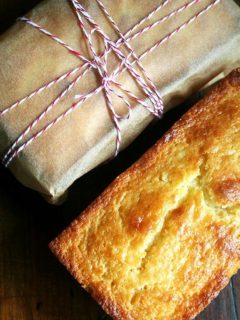
It turns out that pawpaw flesh, like bananas and apple sauce, takes well to baking. I made pawpaw cookies first, which were good but cake-like, and so, I experimented with a quick bread. I replaced the banana in my mother’s delectable banana bread recipe with the same amount of pawpaw flesh. Success! Moist and fruity, the pawpaw quick bread tasted better and better with each passing day. Now, because pawpaw season is over, use bananas instead — it is a wonderful recipe, and the bread, when baked in small loaf pans, makes a nice gift.

Pawpaw Quick Bread

butter or spray oil for greasing
2 ½ cups flour
2 teaspoons baking soda
¼ teaspoon table salt
2 scant cups sugar
1 cup butter, softened
4 eggs
½ teaspoon vanilla
3 cups pawpaw pulp*
*An equal amount of mashed ripe bananas can be used in place of pawpaws

Preheat the oven to 350ºF. Grease a bundt pan or 2 standard-sized load pans (8 x 11) or 5 mini loaf pans. Set aside.

Whisk together flour, baking soda and salt. Set aside. Cream sugar and butter until light and fluffy. Add eggs one at a time, beating well after each addition. Add the vanilla. Add the pawpaw pulp, and beat to combine. Add the dry ingredients and mix only until the flour is incorporated — don’t overmix.

Pour batter into prepared pans and place in the oven. (If using mini pans, place them on a sheet pan first.) Bake for 40 to 45 minutes for mini pans or 45 to 60 minutes for the bundt and larger loaf pans. Cake should be brown and should start to leave the sides of the pan.

Let cool on rack for 15 minutes before removing from the pan.

Rosemary-Butternut Squash Bisque & Challah

In the beginning of the growing season, I promised to document each CSA I received. To say the least, I have been negligent, especially recently. For this soup, I think I used the contents of three separate CSAs. I definitely roasted two butternut squash and two delicata squash, and I swear I roasted a pumpkin too, but I can’t find any documentation of actually receiving a pumpkin — I’ve written down each week’s content, and pumpkin is no where to be found on my lists. Am I going crazy?

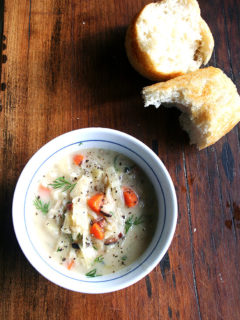
Anyway, this soup couldn’t be simpler to make, and the recipe really is just a guide. I set the oven to 400ºF or 450ºF, cut the squash in half, scooped out the seeds, placed the squash cut-side down, and roasted them until they were tender (maybe 45 minutes or an hour). Once cooled, I scooped out the flesh, combined it all in a bowl, froze 2 cups of the mix for a later use (maybe ravioli filling) and added the rest (about 2 quarts) to a pot. I filled the pot with chicken stock, added salt, pepper and chopped rosemary, and simmered it for 30 minutes. I used my emersion blender to purée the mix, and in no time I had made a delectable soup.

The recipe called for orange zest, which I didn’t have and so didn’t use, but I remember it being a nice flavor when my mother used to make this soup for us. The recipe also calls for cream — which I guess justifies the title, though I would hardly call this purée a bisque — which I also didn’t use.

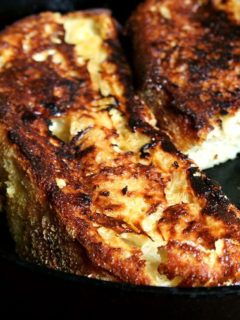
I happened to have some frozen challah on hand and it turned out to be a nice dipping bread, though any bread will do. Little Lindis and Mr. T. are heating up a bowl of this soup as I write…they can be the judges.


Rosemary-Butternut Bisque
Adapted from a Molly O’Neill recipe printed in the New York Times Magazine, Nov. 06, 1994
Yield = 2 quarts

2 medium butternut squash
olive oil
6 cups chicken broth, preferably homemade
1 tablespoon chopped fresh rosemary
2 teaspoons grated orange zest
kosher salt and pepper to taste
2 tablespoons heavy cream, optional

Preheat the oven to 375ºF. Cut the squash in half lengthwise, scoop out the seeds and discard. Drizzle a teaspoon of olive oil on the baking sheet. Place the halves cut side down, rub in the oil and place in the oven. Roast until knife tender, about 45 minutes. Remove squash from the oven and let cool.

Scoop the flesh into a saucepan (discarding the skin), and add the broth, rosemary, orange zest, a big pinch of kosher salt and pepper to taste. Bring to a boil, reduce heat, and let simmer for 30 minutes. Using an emersion blender, puree the mixture until smooth. Alternatively, transfer to a food processor or blender, and puree until smooth. Taste, adjust seasoning if necessary and adding the cream if desired. Serve with crusty bread.

Measuring ingredients with a weight scale, just as professional bakers do, will more accurately reproduce this recipe than will volume measurers. While more accurate than digital scales, mechanical scales are expensive, take up space and are perhaps unnecessary for the home baker. Salter brand makes several good, reasonably priced, easy-to-store scales available at Fante’s, Kitchen Kapers and Williams Sonoma. For normal baking, a six to nine pound capacity will suffice.

Challah
Adapted from Peter Reinhart’s The Bread Baker’s Apprentice (Ten Speed Press, 2001)
Yield = 1 large loaf

4 cups (18 oz.) unbleached bread flour
¼ cup (2 oz.) granulated sugar
1 teaspoon (.25 ounce) salt
1 1/3 teaspoons (.15 ounce) instant yeast
2 tablespoons (1 oz.) vegetable oil
2 large eggs, lightly beaten
2 egg yolks, (whites reserved) lightly beaten
¾ cup plus 2 T. water
sesame or poppy seeds for garnish (optional)

Whisk together the flour, sugar, salt and yeast in the bowl of a stand mixer. In a separate bowl, whisk together the oil, eggs, yolks and water. Pour the liquid mixture into the flour mixture. Mix on medium-low speed for six minutes using the dough hook, adding a touch more flour if necessary — dough should gather round the hook (not be stuck to the bottom of the bowl), but be careful not to add to much additional flour. (Alternatively, knead on a lightly floured work surface for 10 minutes. While this method works fine, using a mixer helps prevent adding too much additional flour to the dough.)

When dough is soft and supple (not sticky), transfer the dough to a lightly oiled bowl, rolling the dough to coat. Cover the bowl with plastic wrap and leave to rise for one hour.

Remove the dough from the bowl, knead for two minutes to degas. Shape the dough into a ball, return it to the bowl, cover with plastic wrap and let rise again for another hour, or until the dough has doubled in bulk.

Remove the dough from the bowl and divide into three equal pieces. (If using a scale, weigh each portion.) Roll each portion into a ball, place on a work surface, and let rest 10 minutes.

Roll the pieces into long strands, each the same length, each with tapered ends and a slightly thicker center portion. Braid the dough starting from the middle: On a work surface, place the three strands perpendicular to you and parallel to one another. From the left, number the strands 1, 2, 3. Beginning in the middle of the loaf and working toward you, follow this pattern: right outside strand over the middle strand (3 over 2); left outside strand over the middle (1 over 2). Repeat until you reach the bottom end of the dough. Pinch the end closed to seal and rotate the dough 180º so that the unbraided end is facing you. Continue braiding but now weave the outside strand under the middle strand until you reach the end of the loaf. Pinch together the ends to seal.

Line a sheet pan with parchment paper and transfer the loaf to the pan. Beat the reserved egg whites until foamy and brush the dough with them. (Set aside whites for later.) Mist the loaf lightly with spray oil and cover loosely with plastic wrap. Let the dough rest at room temperature until it is one-and-a-half times its original size, about 60 to 75 minutes.

Preheat the oven to 350ºF with the rack in the middle shelf. Brush again with the egg whites, and if desired, sprinkle with sesame seeds. Bake for 20 minutes. Rotate the pan 180º and continue baking for another 20 minutes, or longer. The bread should be a rich golden brown.

Transfer to a cooling rack and let cool at least one hour before slicing.

Gluten-Free Cooking Spree

First let me make known that I’ve borrowed this “Gluten-Free Cooking Spree” slogan from the National Foundation for Celiac Awareness (NFCA), an amazing organization started by Alice Bast, a Philadelphia woman full of energy and initiative. I spoke with Bast over the phone a few days ago and listened to her recount her tragic yet inspiring story.

Bast, after suffering the trauma of delivering a stillborn baby followed by several miscarriages, visited 23 doctors before learning she had celiac disease. When she discovered that all of her health complications could have been prevented had she changed one aspect of her life — her diet — she quit her job (a top executive at a tech firm), started the NFCA, and resolved to devote her life to raising awareness about this debilitating digestive disease. Read Alice Bast’s whole story on the NFCA’s Web site.

One out of every 133 people has celiac disease — 3 million Americans — yet 97 percent of celiacs don’t know they have it. Through the efforts of Bast, the NFCA and other organizations sharing the same goal, more doctors are recognizing the prevalence of the disease, and fewer people as a result are suffering. Currently the only cure for this disabling disease is to eliminating gluten, a protein found in wheat, barley and rye, from the diet.

While Bast told me a half dozen or so stories about celiacs restoring their health and reclaiming their lives after adopting a gluten-free diet, one is particularly poignant. Last August, a woman who had been trying to get pregnant for 10 years without success, read Bast’s story in Good Housekeeping. The woman sensed she had celiac disease, began the diet, and within 6 months became pregnant.

Other celiacs have seen their migraine headaches, incessant stomachaches, diarrhea and nausea — stresses they have suffered their whole lives — disappear within days of beginning the gluten-free diet.

The “Gluten-Free Cooking Spree” is the name of an event the NFCA is bringing to cities across the country. This past June, 10 chefs and doctors in Philadelphia teamed up to prepare tasty gluten-free dishes in a competition judged by George Perrier of Le Bec-Fin and Christina Pirello of Christina Cooks. Read more about the event on the NFCA’s Web site.

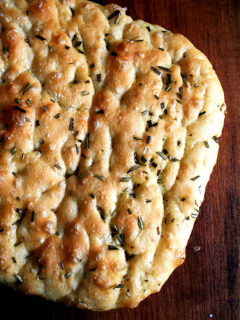
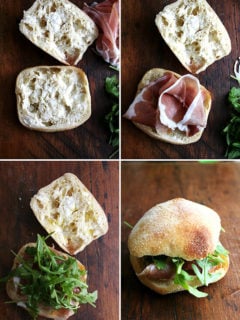
I decided to see for myself what gluten-free cooking entails. I’ve now introduced my pantry to a host of ingredients I never thought it would meet — brown rice flour, buckwheat flour, tapioca flour and xanthum gum. And, I have to say, the two recipes I tested were delicious. I have been slathering fresh ricotta on the focaccia for breakfast, and enjoying a brownie each night after dinner.

I am not in any way trying to prove that anyone can easily conform to this diet by simply purchasing the necessary ingredients. This diet requires celiacs to inspect all food labels thoroughly and question restaurant wait staff and chefs exhaustively, because even the tiniest trace of gluten — present in soy sauce, vinegars, lunch meats, panko (Japanese breadcrumbs) and most soups — can trigger an adverse immune response.

While I’ll likely never know what life as a celiac is like, I have a better understanding after speaking with Alice Bast and reading other personal stories on the NFCA Web site. I greatly admire Bast’s many noble efforts to prevent others from suffering the same tragedies she unnecessarily endured.


Gluten-Free Brownies
Adapted from Karina’s Kitchen: Recipes From a Gluten Free Goddess
www.glutenfreegoddess.blogspot.com
Yield = 16

5 oz. dark chocolate chips (gluten-free) + more for topping
½ C. butter
2 eggs
1 C. packed light brown sugar
1 tsp. vanilla extract
½ C. almonds, processed into a fine meal (or ½ C. almond flour)
¼ C. brown rice flour
½ tsp. fine sea salt
½ tsp. baking soda

Preheat the oven to 350ºF. Butter an 8-by-8-inch square baking pan.

Microwave the dark chocolate and butter in a Pyrex bowl for 45 seconds, stirring once halfway.

In a stand mixer using the whisk attachment, beat the eggs on medium-high speed until frothy. Add the brown sugar and beat until the mixture is smooth.

Add the melted chocolate mixture to the egg mixture and beat well for 1 minute. Add the vanilla and whisk until blended. The chocolate will look smooth and glossy. Remove bowl from stand and set aside.

In a large bowl, whisk together the ground almonds (or flour), rice flour, salt and baking soda. Add this dry mix to the chocolate mixture and stir until just combined. Pour batter into prepared pan. Sprinkle another 2 to 4 tablespoons of chocolate chips evenly over the batter if desired. Place in the oven and bake for 32 to 34 minutes. Test with a paring knife or a toothpick.

Cool completely on a wire rack, about 1 hour. Run a butter knife around the edges of the pan. Turn pan over quickly and slam onto a cutting board. The whole block of brownies should come right out. Leave the brownie block face down and cut into 16 squares, wiping knife in between cuts. Serve or store in an airtight container.

Gluten-Free Focaccia
Adapted from www.celiac.com
Yield = 8 sandwiches

¼ cup olive oil, plus more for greasing
1½ C. brown rice flour
½ C. buckwheat, amaranth or teff flour
2 C. tapioca flour
2/3 C. instant non-fat dry milk powder
3 tsp. xanthan gum
1 tsp. kosher salt
2 T. active dry yeast
1 T. sugar
1½ C. lukewarm water
4 egg whites at room temperature
2 sprigs rosemary, leaves removed and finely chopped
sea salt for sprinkling

Grease a parchment paper-lined or Silpat-lined sheet tray with 1 tablespoon of the olive oil. In the bowl of a stand mixer fitted with the dough hook, combine the flours, milk powder, xanthan gum, salt, yeast, and sugar. In a large bowl, combine the water and remaining 3 tablespoons of olive oil. Add olive oil-water mixture to dry ingredients, and mix on medium speed. Add the egg whites one at a time, mixing well after each addition. Beat on medium-high speed for 4 minutes.

Preheat the oven to 450ºF. Transfer dough — it will be very sticky — to the prepared sheet tray. With greased hands, gently spread dough out, dimpling the dough slightly with your fingers — dough will not fill the entire tray. Cover loosely with plastic wrap and let rise for 40 minutes.

Remove plastic wrap, gently dimple dough again with your fingers, being careful not to deflate. Lightly drizzle olive oil over top, sprinkle with the rosemary and salt to taste. Place in the oven, close the door and reduce the heat to 400ºF.

Bake for 15 minutes, rotate the pan and bake for 10 to 15 minutes longer until the focaccia is nicely golden. Remove from the oven and transfer bread from pan to a cooling rack. Let cool completely before slicing and using for sandwiches.